
I have a confession, Gentle Readers. Until the article in the Washington Post last week, I wasn’t really aware of Cottagecore as an interior design trend.


I knew that, thanks to the pandemic, some people were adopting a Little House On the Prairie meets Laura Ashley back-to-the-land-as-long-as-we-have-internet lifestyle, complete with peasant dresses and the occasional chicken.


So I made a little TikTok about Cottagecore and pushed it aside.

But I got to thinking: if the hallmarks of Cottagecore are vintage furniture, bright colors and patterns, layers of materials, and nostalgia, then what’s the difference between it and Maximalism?

Well, not to put too fine a point on it, but I believe it comes down to 2 things: dirt and money.

Maximalism is a celebration of excess. An explosion of color and pattern, and yes, even clutter — a crossover characteristic of the 2 styles — combined with antique furniture, richly patterned rugs, and, if you’re me, a brass Martini table from West Elm. (They REALLY should be paying me.)

But while the rug might be from your great-aunt and the furniture is old, chances are good that the fabrics of Maximalism are fresh and new. The colors are saturated jewel tones, not muddy earth tones. City house, not country house. And Maximalism generally looks expensive, even if it isn’t.
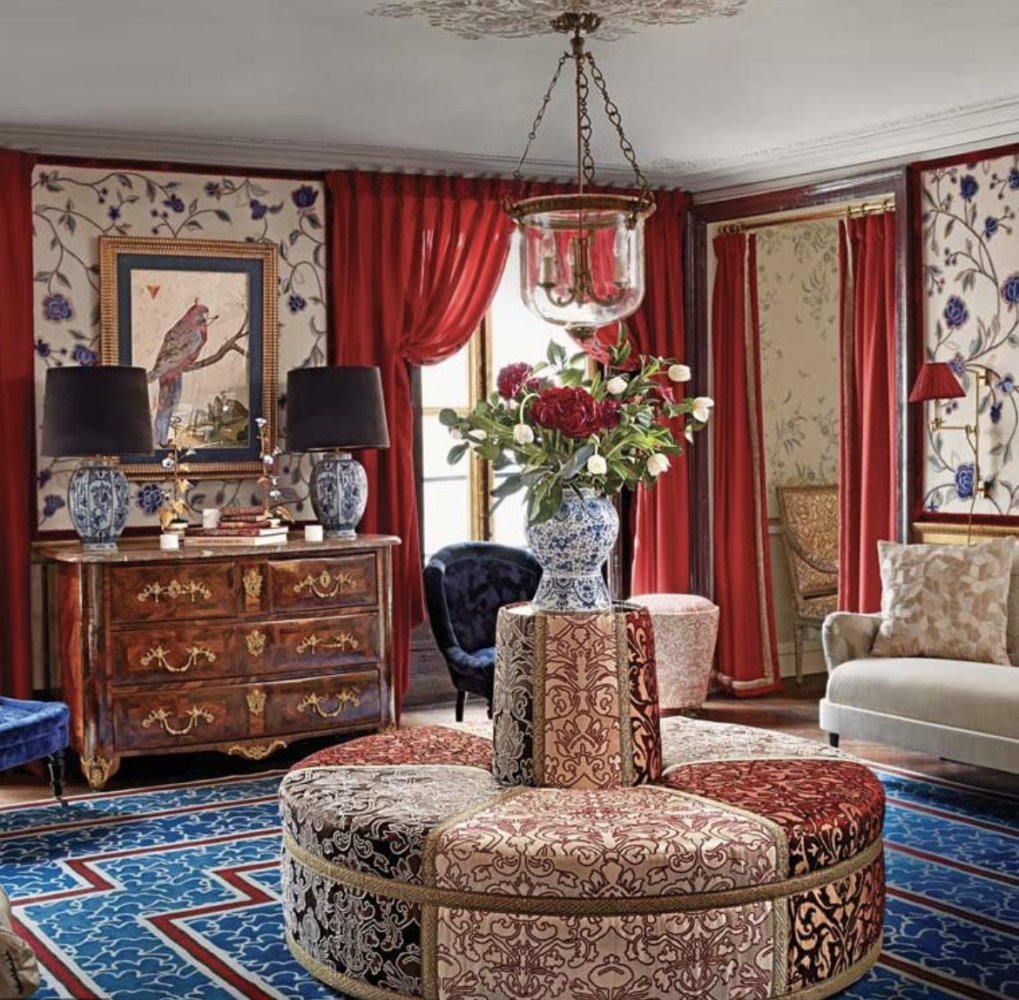
Cottagecore, on the other hand, is musty. It’s more vintage than antique. American frontier, not English manor. The floral patterns might be faded, the painted furniture mismatched, and the inhabitants’ feet bare. It’s rustic. And Cottagecore can look, well, a bit unclean, even if it isn’t.

This is not to say that I find Cottagecore devoid of charm. Au contraire, mon frère! The style can be EXTREMELY charming, especially when it comes to kitchens, with their open hutches of chipped teacups and sun-bleached rose-print café curtains.

Oh, and what IS “Goblincore,” you ask?

Goblincore is the seamy underbelly of the Cottagecore fairy tale.

It’s the forest creeping through your windows. Address: Hobbiton, The Shire.
There you have it, Gentle Readers. Never again will you mistake Cottagecore for Maximalism, or vice-versa. WHEW.
Annie Elliott Design is based in Washington, DC, with offices in St. Michaels, Maryland and Middlebury, Vermont. Annie’s design work and insights have appeared in numerous local and national publications, including HGTV Magazine, The Wall Street Journal, The New York Times, The Washington Post, and Washingtonian Magazine. Annie recently appeared on NBC4 for a story about author Jason Reynolds’ Kingman Park home.
