
Imagine you live in a row house in 1790s London, Gentle Readers. (Actually, it was several connected row houses by the 1820s, but that’s beside the point.)
Imagine that it is lit by oil lamps and candles. Further imagine that you are the collector of fine and interesting art and objects that you would like to be able to see.
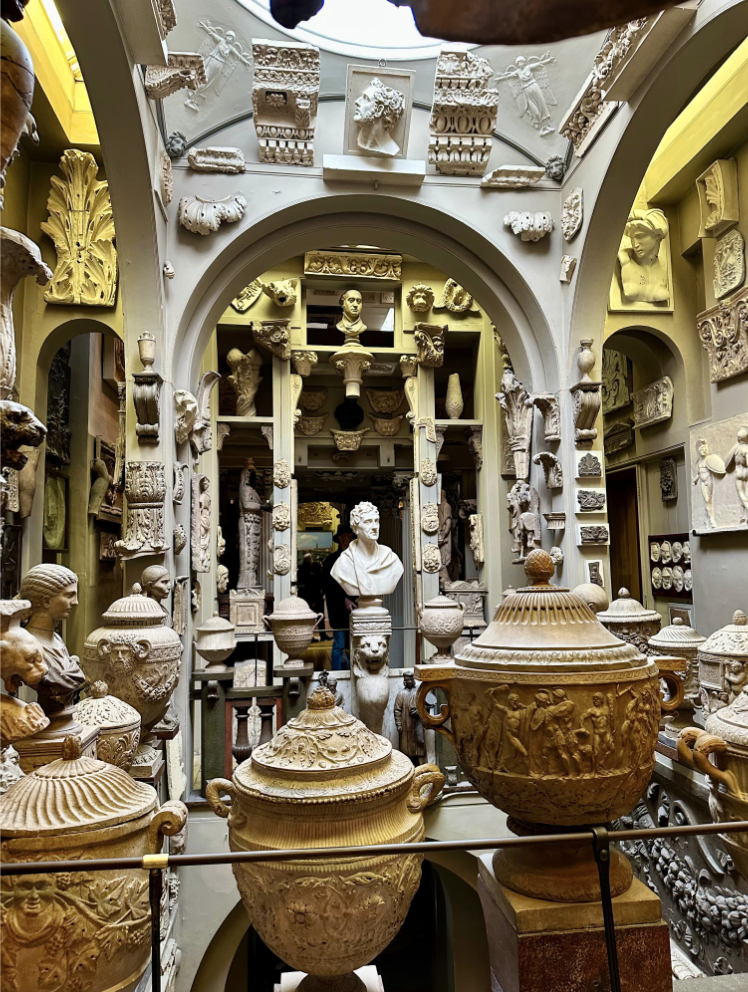
What’s a Regency-era-mansion-dwelling-gentleman-collector to do?
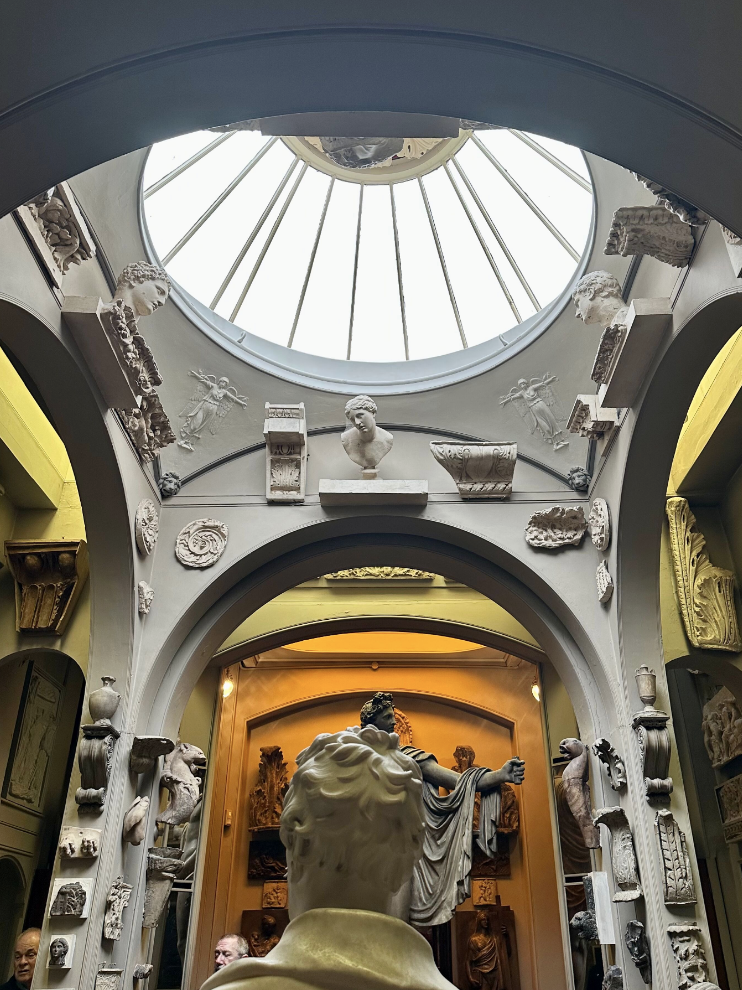
If you’re the English architect Sir John Soane, first you install skylights to bring as much daylight possible through all levels of the building. (Skylights were fairly new and very expensive back then, and few residences had them.)
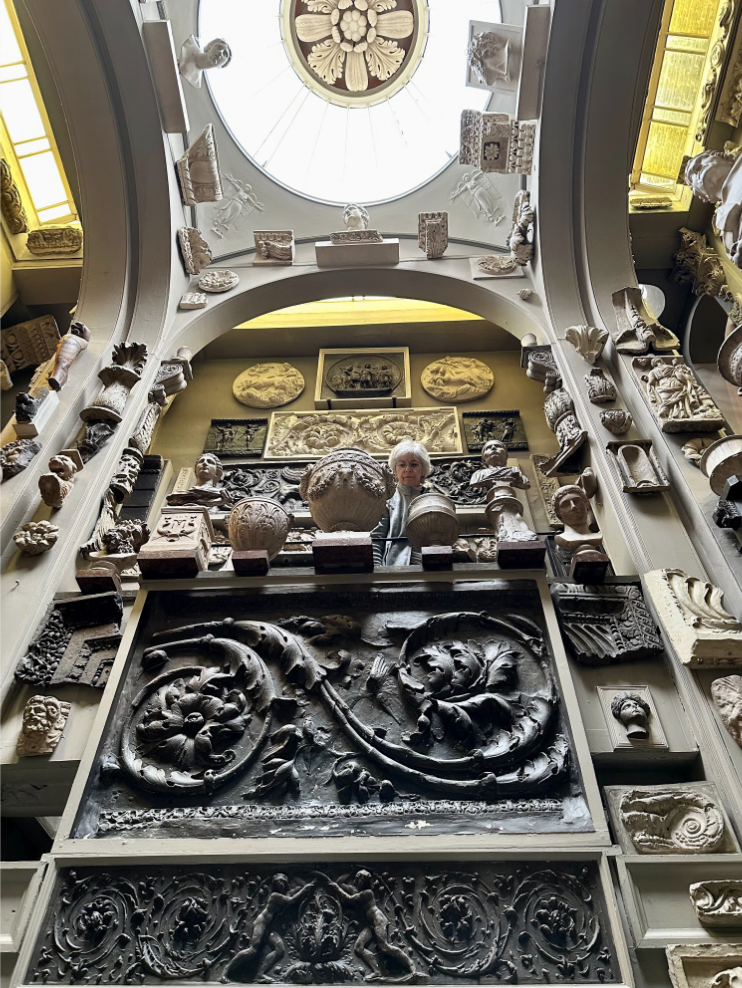
I mean, you install skylights everywhere.
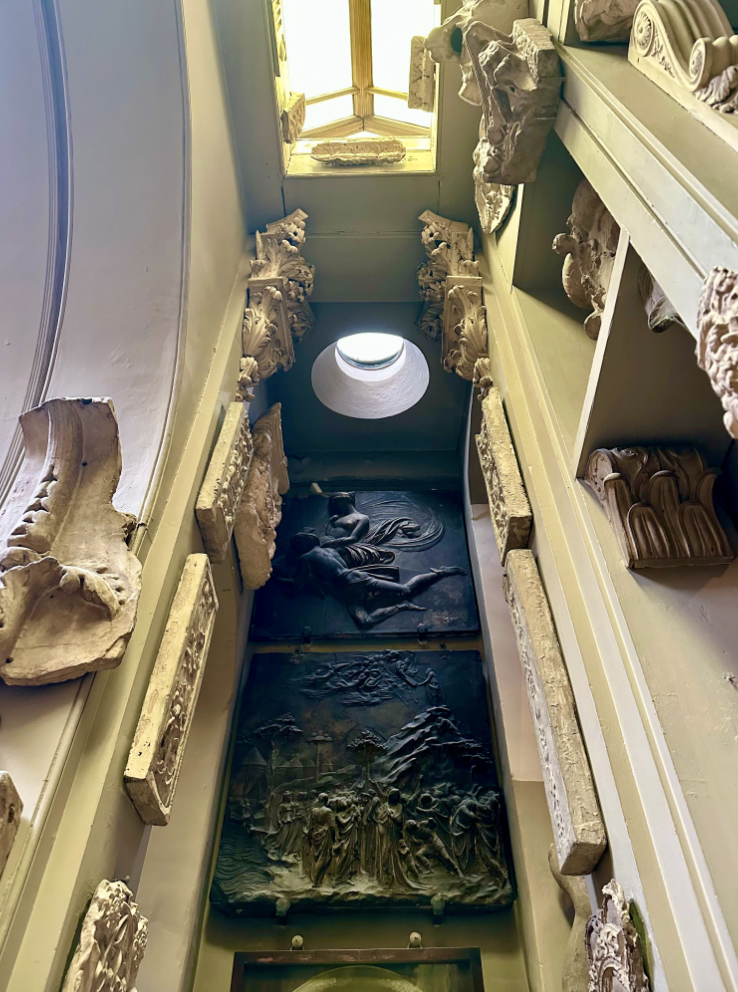
Domed, rectangular, large, small…all kinds. And again: everywhere.
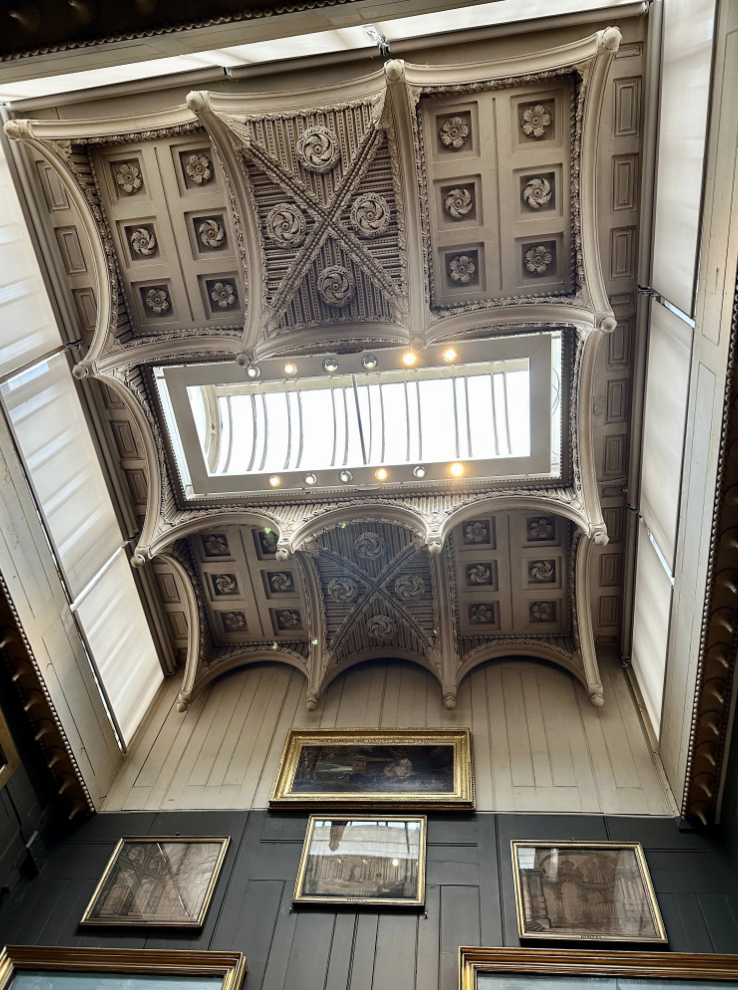
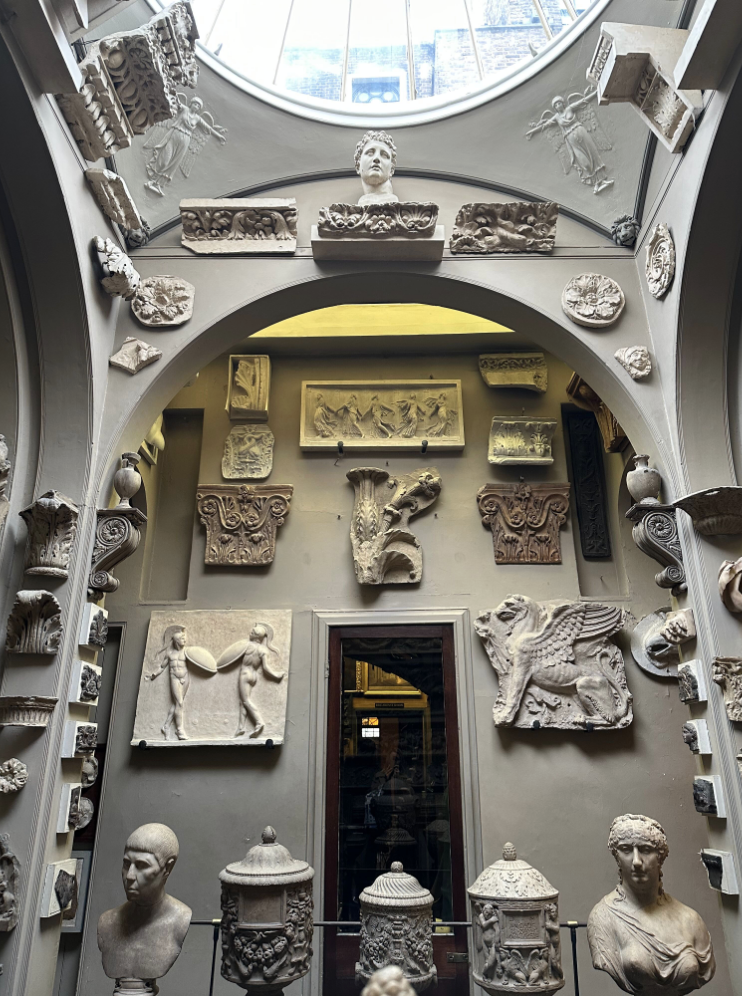
You even cut openings into the floors to coax light into the subterranean level,
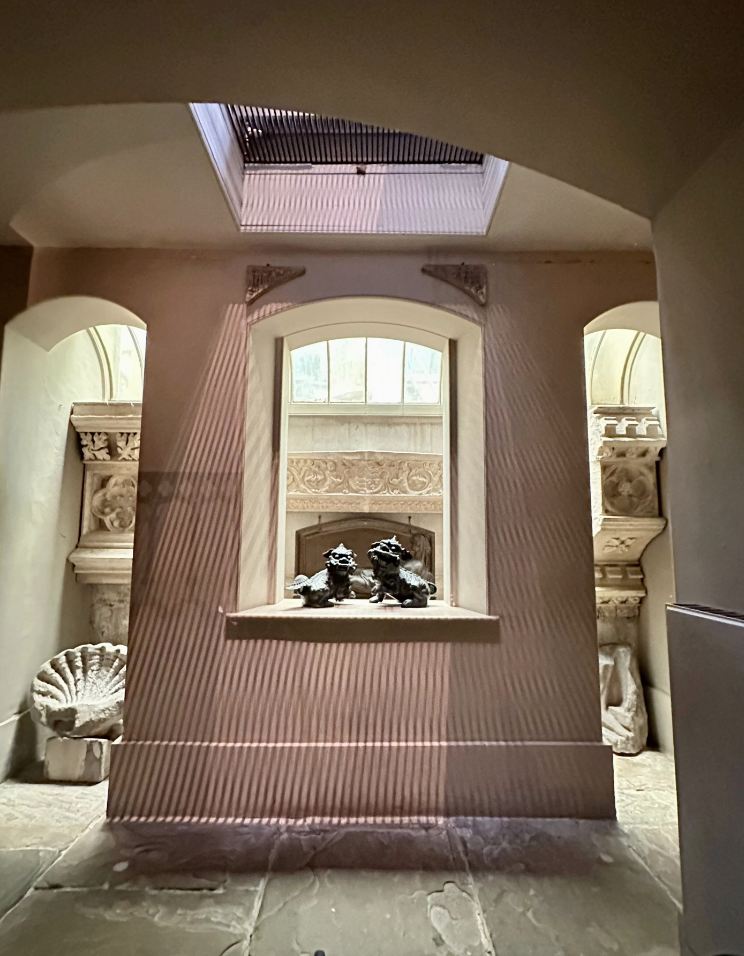
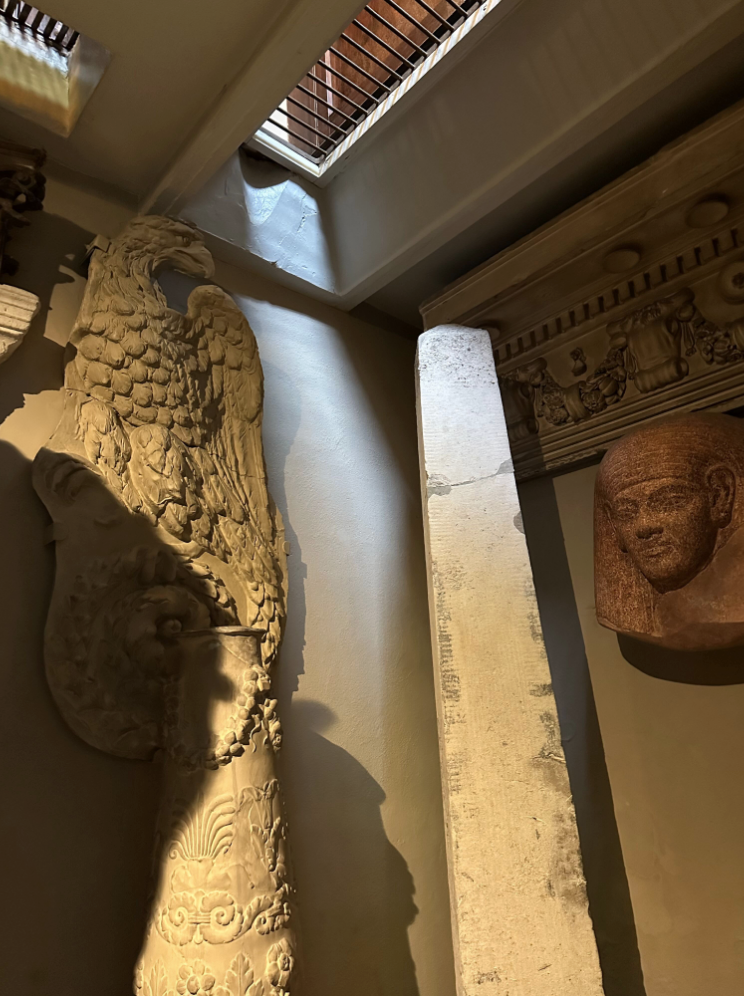
and install slanted, conservatory-like windows between the courtyard and the rooms surrounding it.
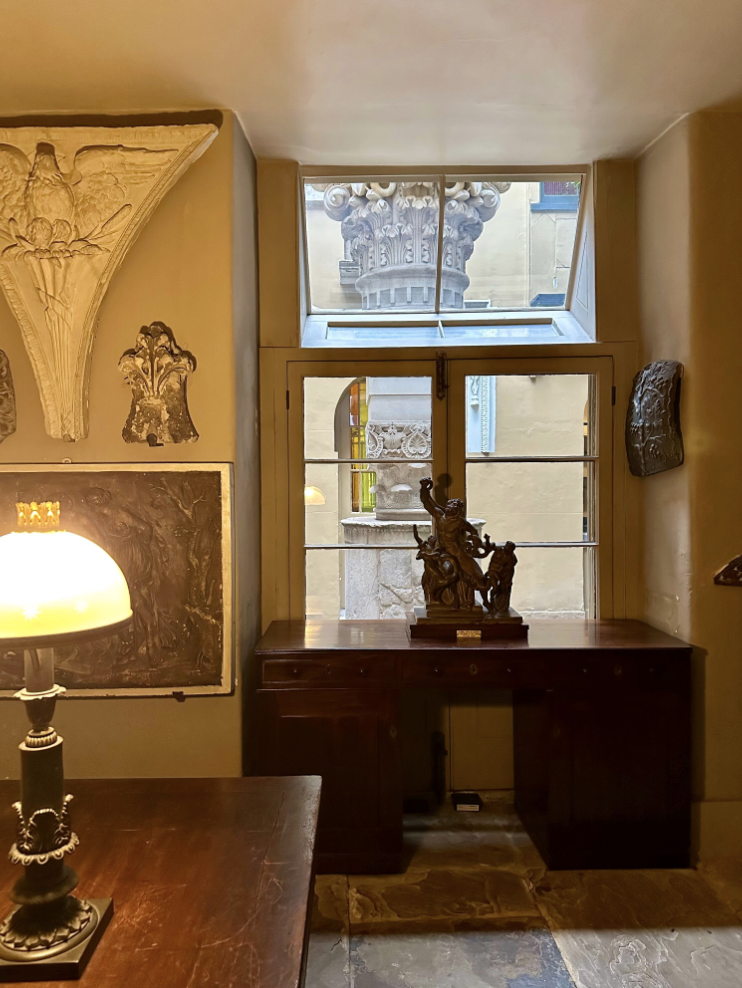
THEN, Gentle Readers, THEN you become something of a genius in your use of mirrors. Because skylights and windows work when there is daylight to be had, but when the sun goes down…what does one do then?
When I visited Sir John Soane’s Museum recently, I was blown away by the cleverness — and craftsmanship — that went into installing so many mirrors to maximize all light: from the sun, candles, and oil lamps.
We’re not just talking about a big mirror over a fireplace. We’re talking about integrating mirrors into the architecture. Stealth mirrors. I didn’t even notice most of them on first pass.
Here’s the library. How many mirrors do you see in this picture?
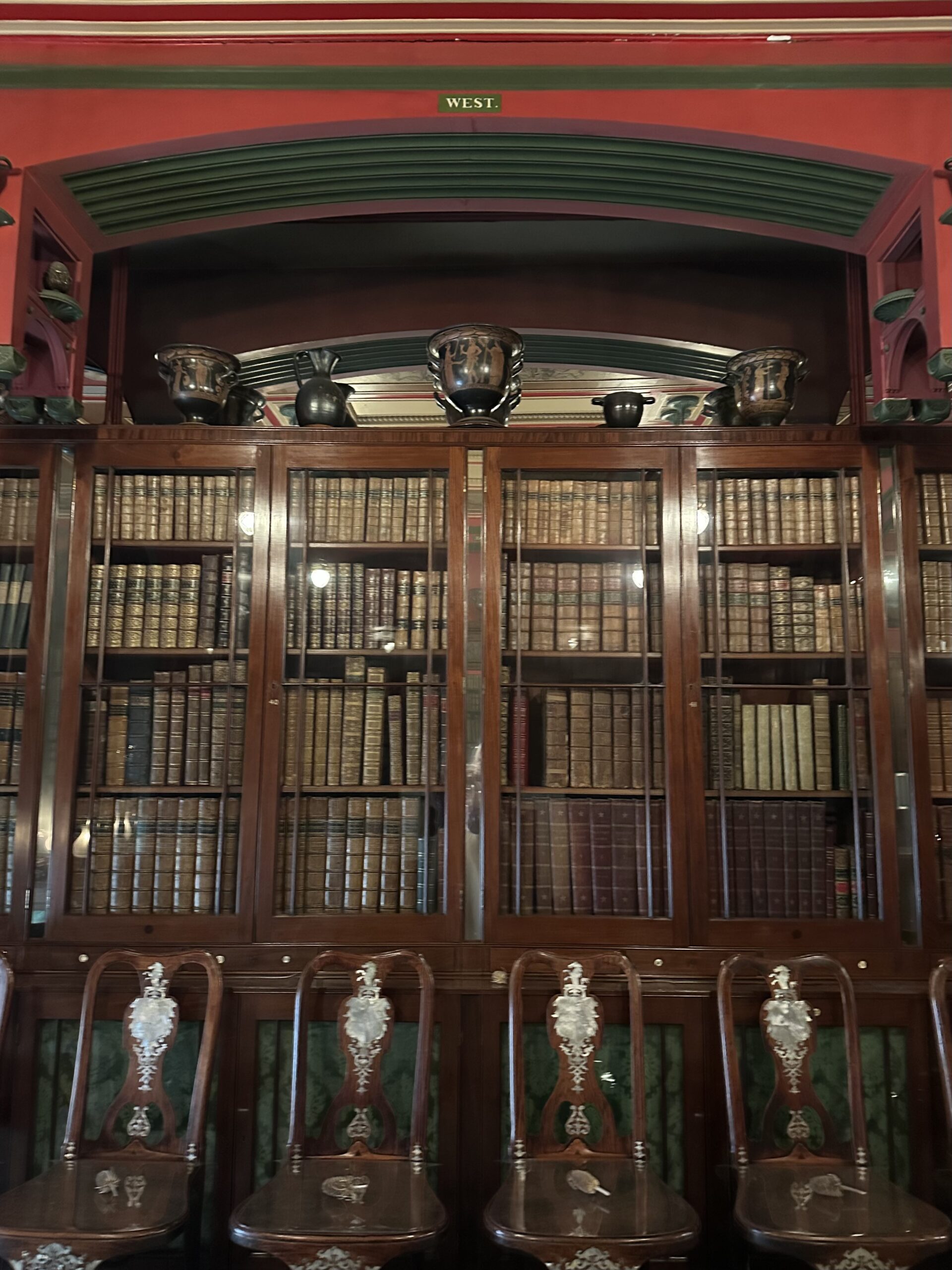
There are four.
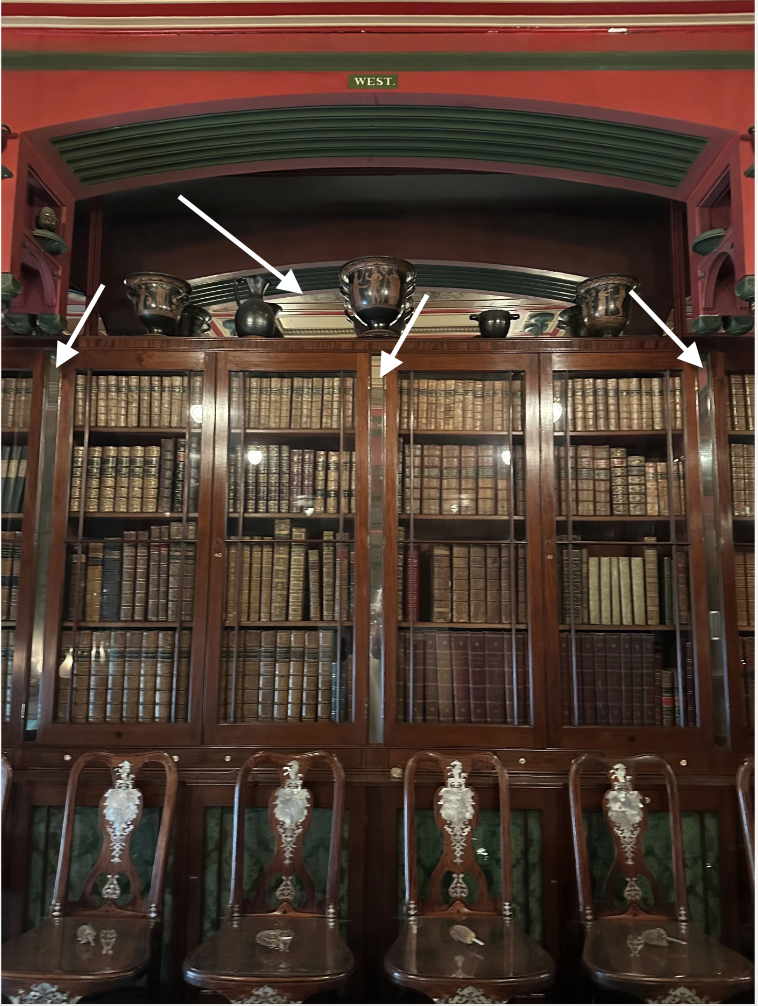
Ok, maybe that was a gimme.
But how about here, in the Breakfast Room? This sketch provides a better wide view than any photograph I took or found. This is from the museum’s website.
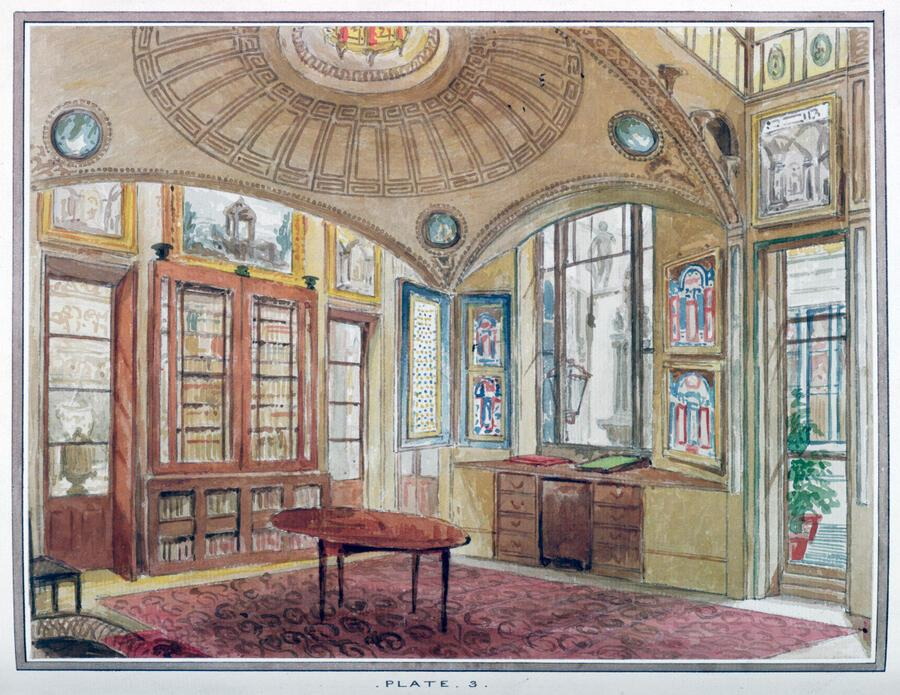
The small mirrors around the stained glass part of the domed ceiling are obvious,
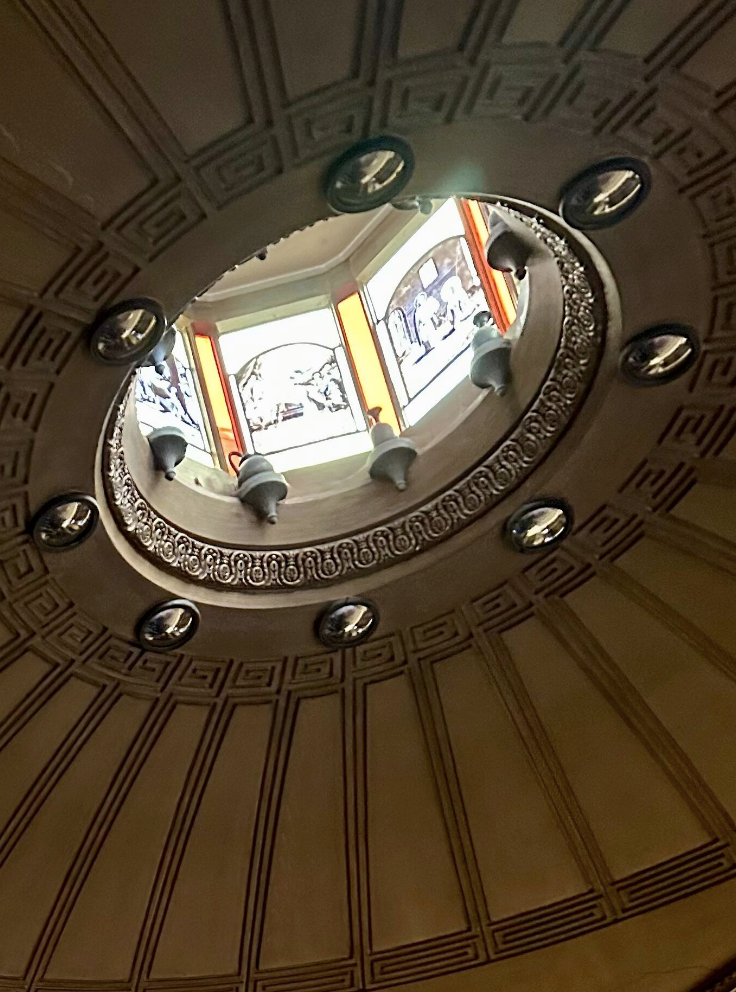
as are the large round mirrors below that.
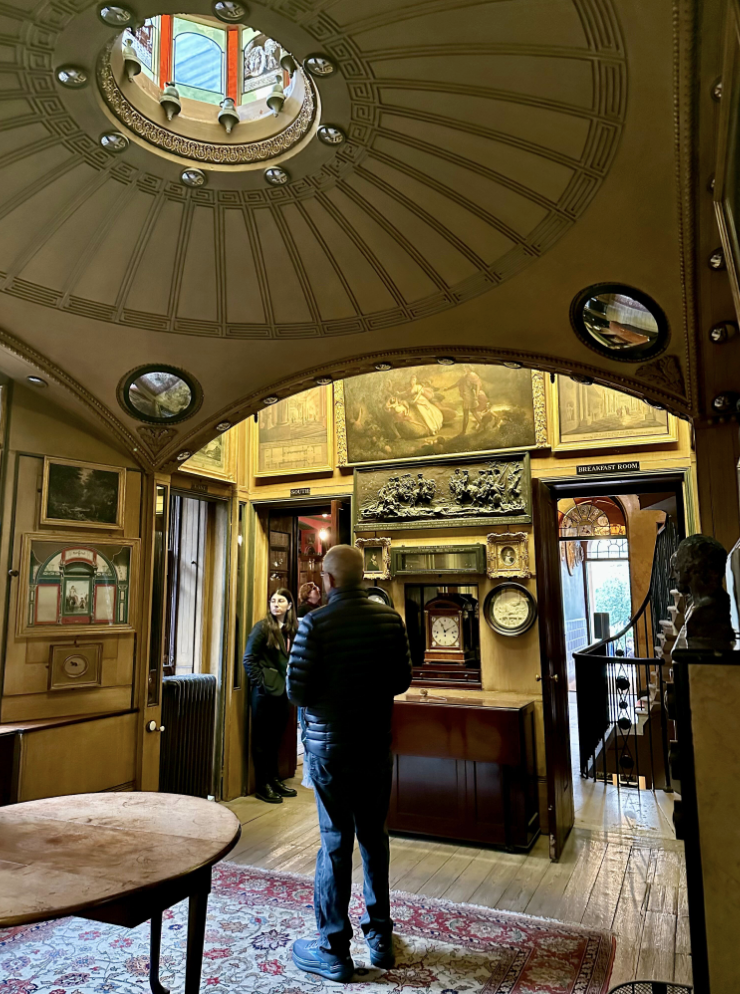
Less obvious, though, are the tiny mirrors in the arches and elsewhere. In this picture alone, you have 25:

There are 6 more on the fireplace.
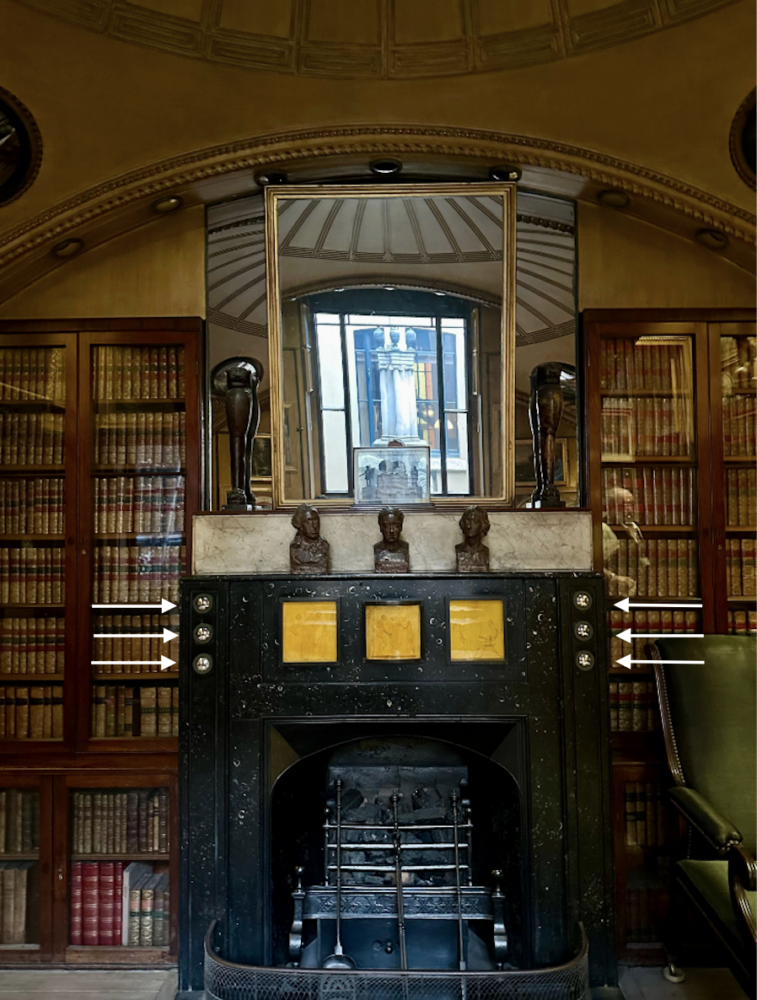
You even tilt the mirror on the mirror above the fireplace to direct light down, to the tabletop — seated-person level.
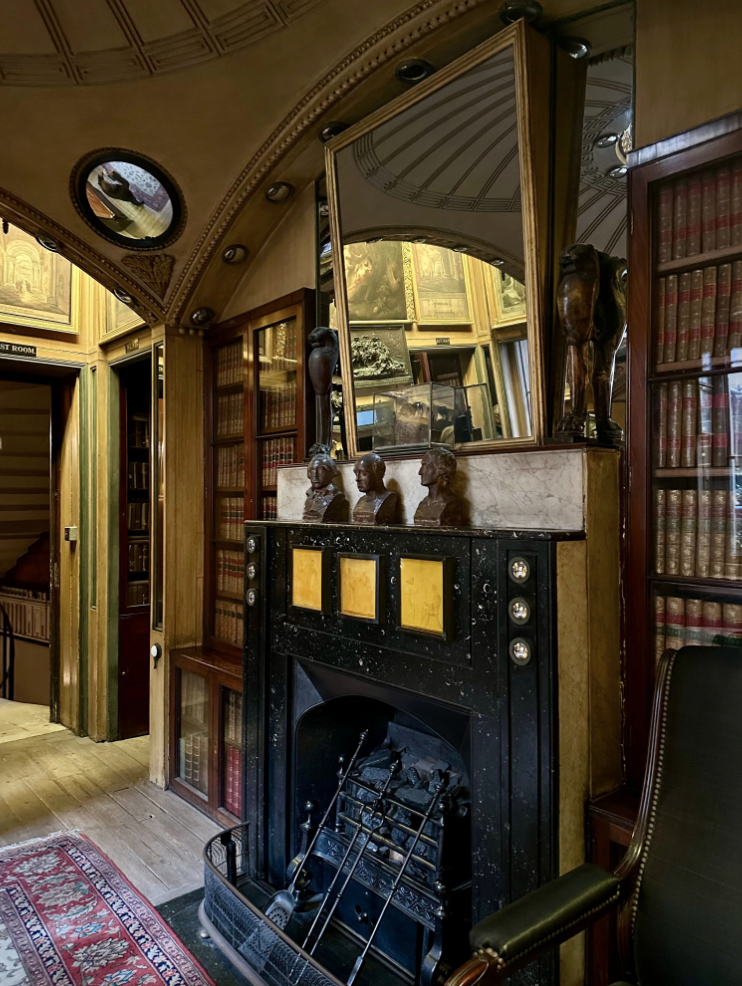
All in all, there are more than 100 mirrors in the Breakfast Room alone. I mean, the man wanted LIGHT.
Sir Soane took every opportunity he could to add mirrors to his museum/office/home, sometimes in an overt way,
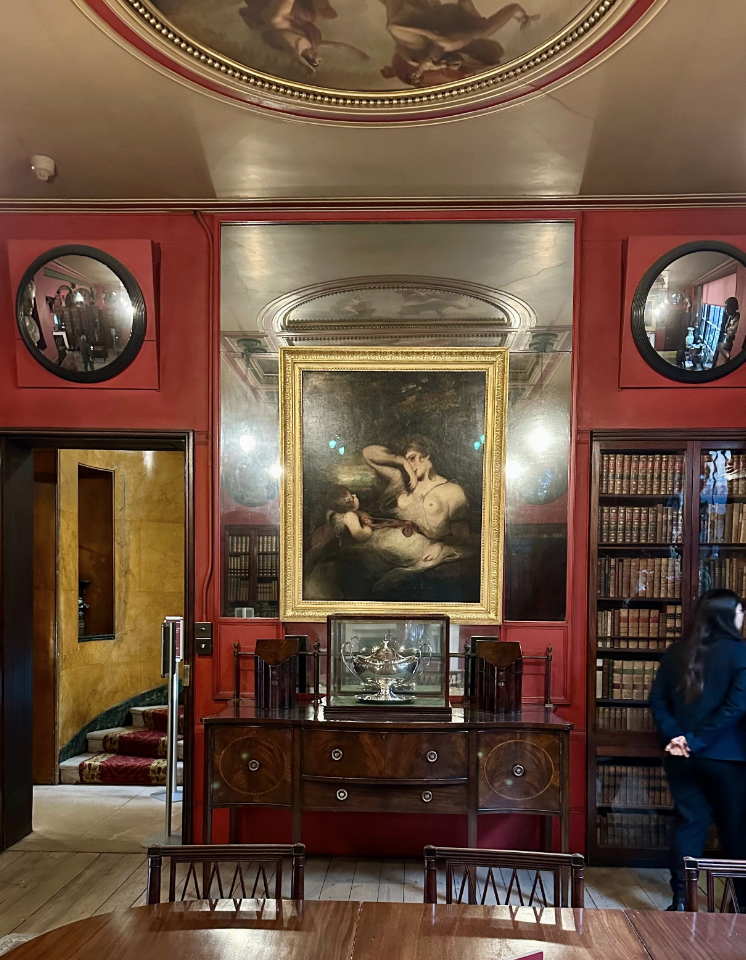
and sometimes surreptitiously.
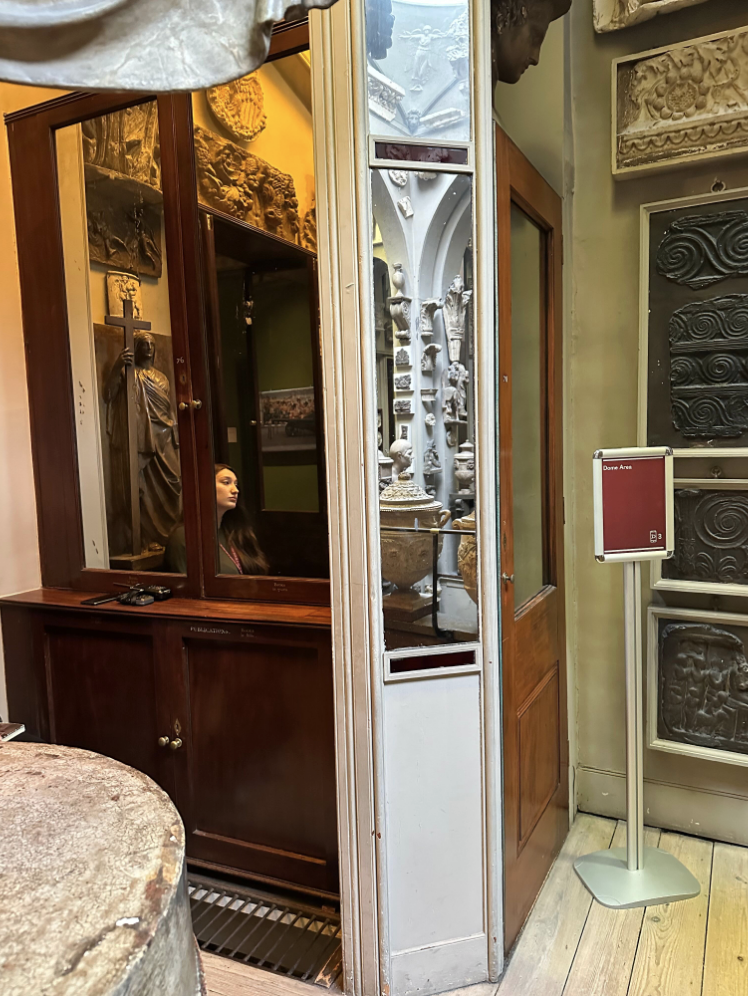
I’ll be honest: I rarely think about using mirrors as an architectural element. There have been a few times when I’ve installed a frameless, chimney-wide, mantel-to-ceiling antiqued mirror over a fireplace, on which I’ve hung a framed mirror or painting. That can look really nice.
But looky here! A mere few months after I visited Sir John Soane’s Museum, I had lunch at a darling restaurant in Holland Park. And what did I see?
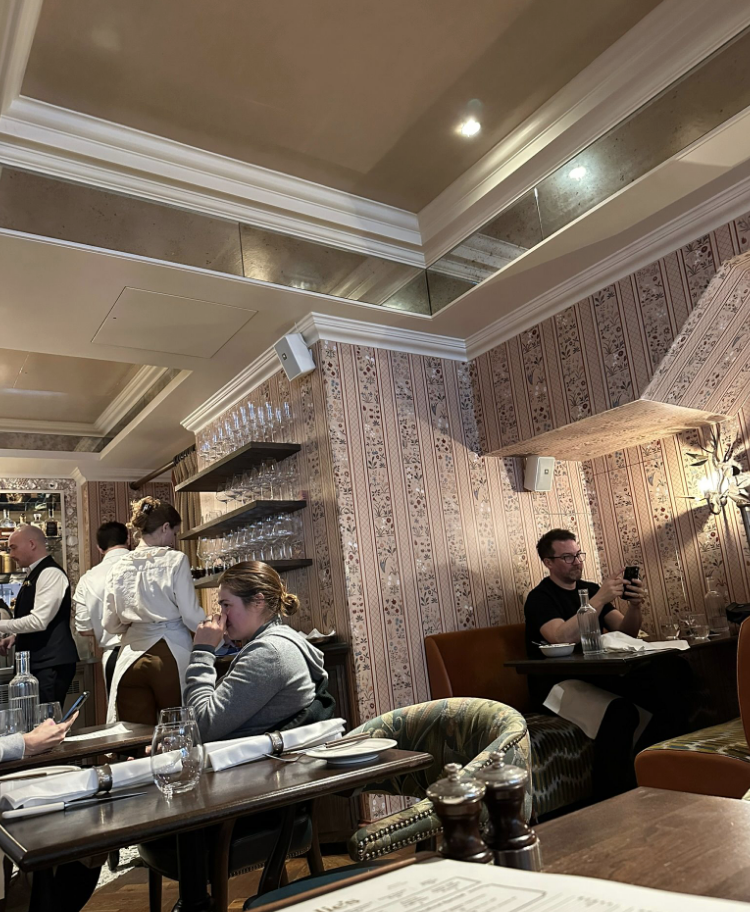
Mirrors on the faces of soffits. Don’t miss the smaller ones at left, by the bar.
Subtle, right? Nay, innocuous? But the mirrors bring light and a bit of spaciousness to a smallish room with no side windows.
I bet I could pull this off in the right under-lit room. It’s something to think about, for sure.
Sir John Soane’s Museum is located at 13 Lincoln’s Inn Fields, London, WC2A 3BP.
Annie Elliott Design is booking projects for late spring 2026. Please contact us to discuss.
