• Skip to main content
  • Skip to header left navigation
  • Skip to header right navigation
  • Skip to site footer
  • about
    • services
    • team
  • portfolio
  • press
Annie Elliott Design, Washington DC

Annie Elliott Design

Greater Washington DC

  • book
  • blog
  • contact

Are Roman shades really from Rome? Window treatment origin stories

Annie Elliott | March 29, 2026

This will come as no surprise, Gentle Readers, but I think about window treatments a LOT. Especially during the transition from winter to spring, with the change in temperature and light…I’m reminded what a critical design element window treatments are. And then I get to thinking about window treatments through the ages. Who invented drapes? Did the Romans really invent Roman shades?

I decided to do some digging.
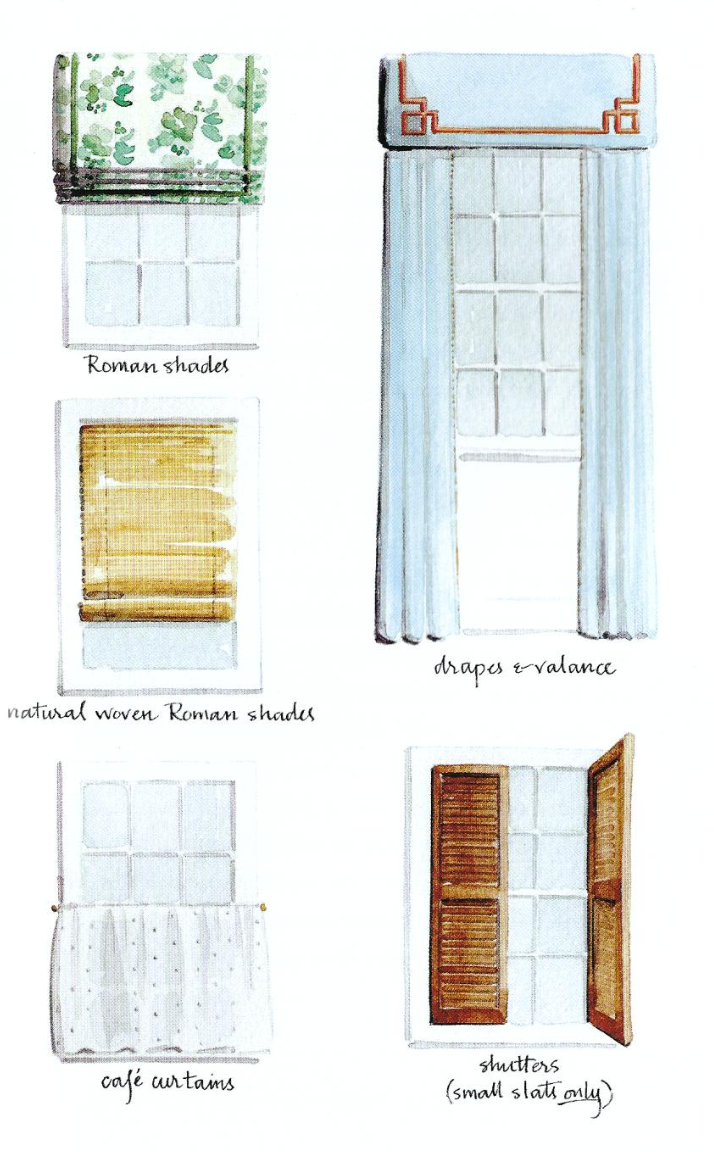
Illustration of different window treatment types
Impossibly charming illustration by Tania Lee from my book, My Neighbor Saw Me Naked and Other Reasons You Need Drapes.

Venetian Blinds

“Venetian blind” is a misnomer: they originated in Persia! Today, the slats are primarily wood, as opposed to their aluminum film noir predecessors. Venetian blinds are surprisingly effective at providing both light control and privacy. (FWIW, I prefer slats that are 1.5-2″ wide. No skinnier, no wider.)

Venetians discovered the blinds while trading goods with Persians in the mid-1700s. Soon after, “Venetian blinds” were introduced in America. One of the first well-known buildings to use these blinds was St. Peter’s Church in 1761 — in my adopted hometown of Philadelphia :)

Exterior photograph of historic brick church
St. Peter’s Church, Philadelphia

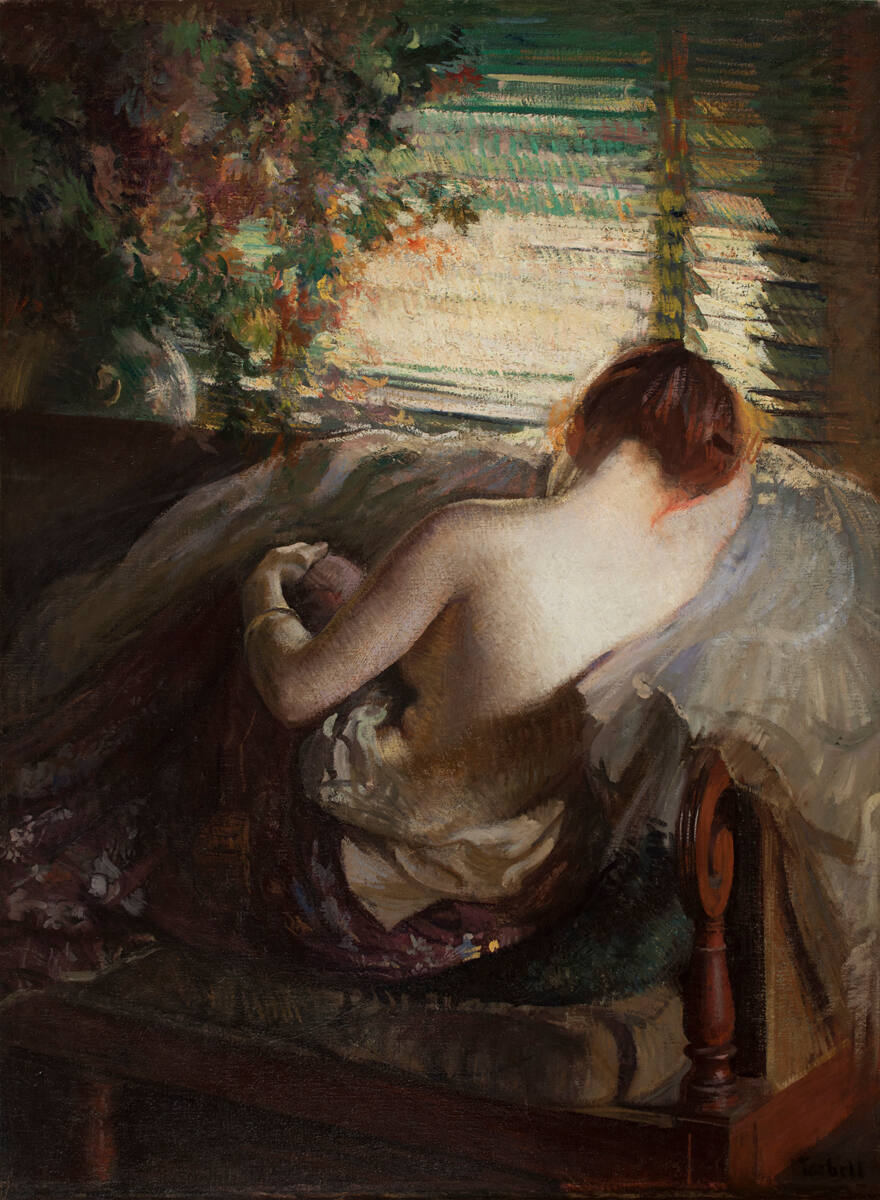
Fun fact, because you know I can’t resist an art history sidebar: Venetian blinds appear in the work of several Impressionists! Edmund Charles Tarbell painted “The Venetian Blind” in 1898.
Painting of a woman in front of a window with blinds
“The Venetian Blind” by Edmund Charles Tarbell, 1898

And James Tissot features them in “Tea” in 1872.
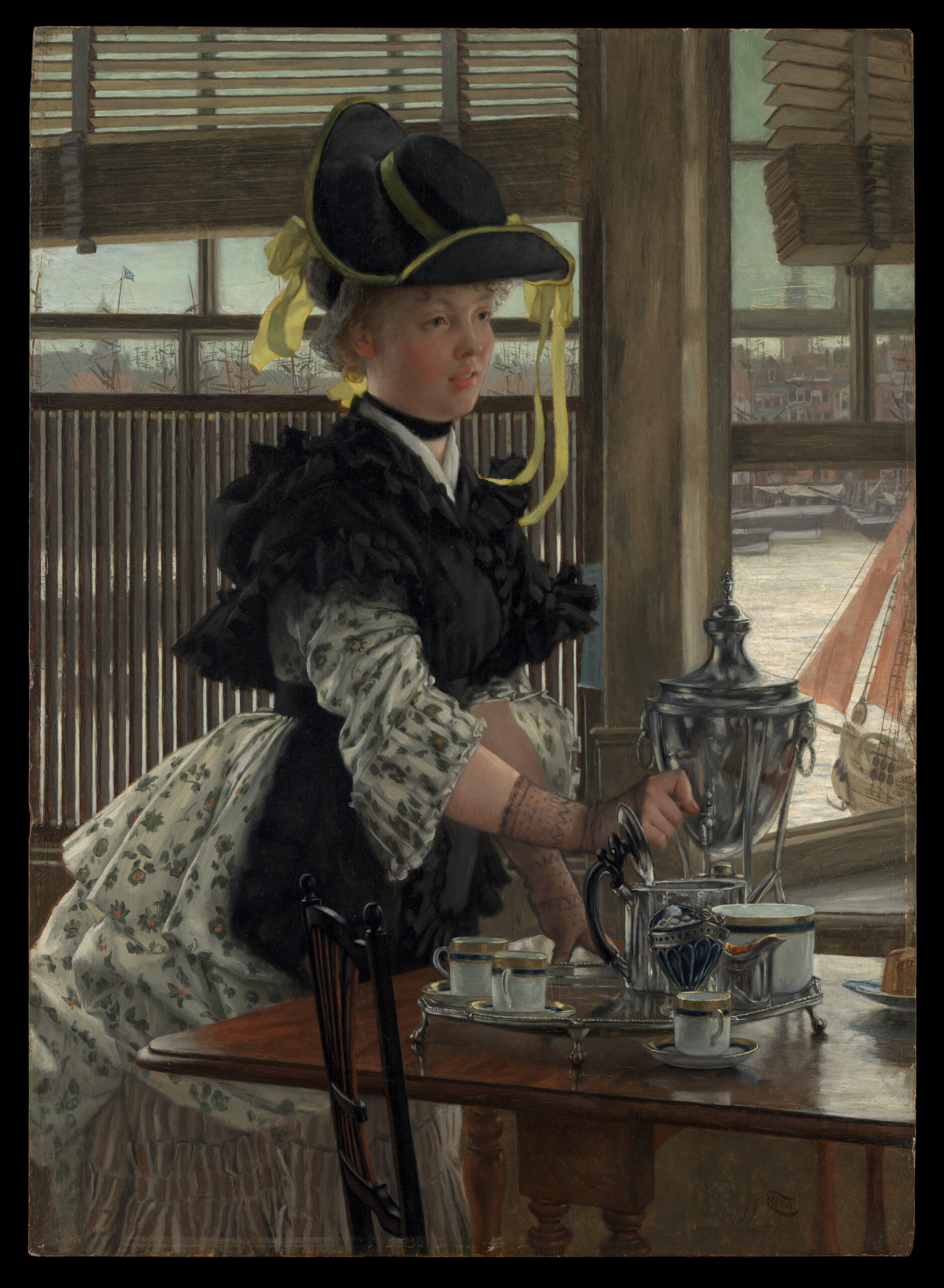
Painting of a woman having tea in front of a window with Venetian blinds
“Tea” by James Tissot, 1872

Roman Shades

“Roman shade” is NOT a misnomer, as the Romans can take full credit. When archaeologists excavated the ruins of Pompeii, they discovered a window from 79 AD (79 AD!!!) covered in one layer of wooden slats underneath a layer of linen. In other words, a shade!

J
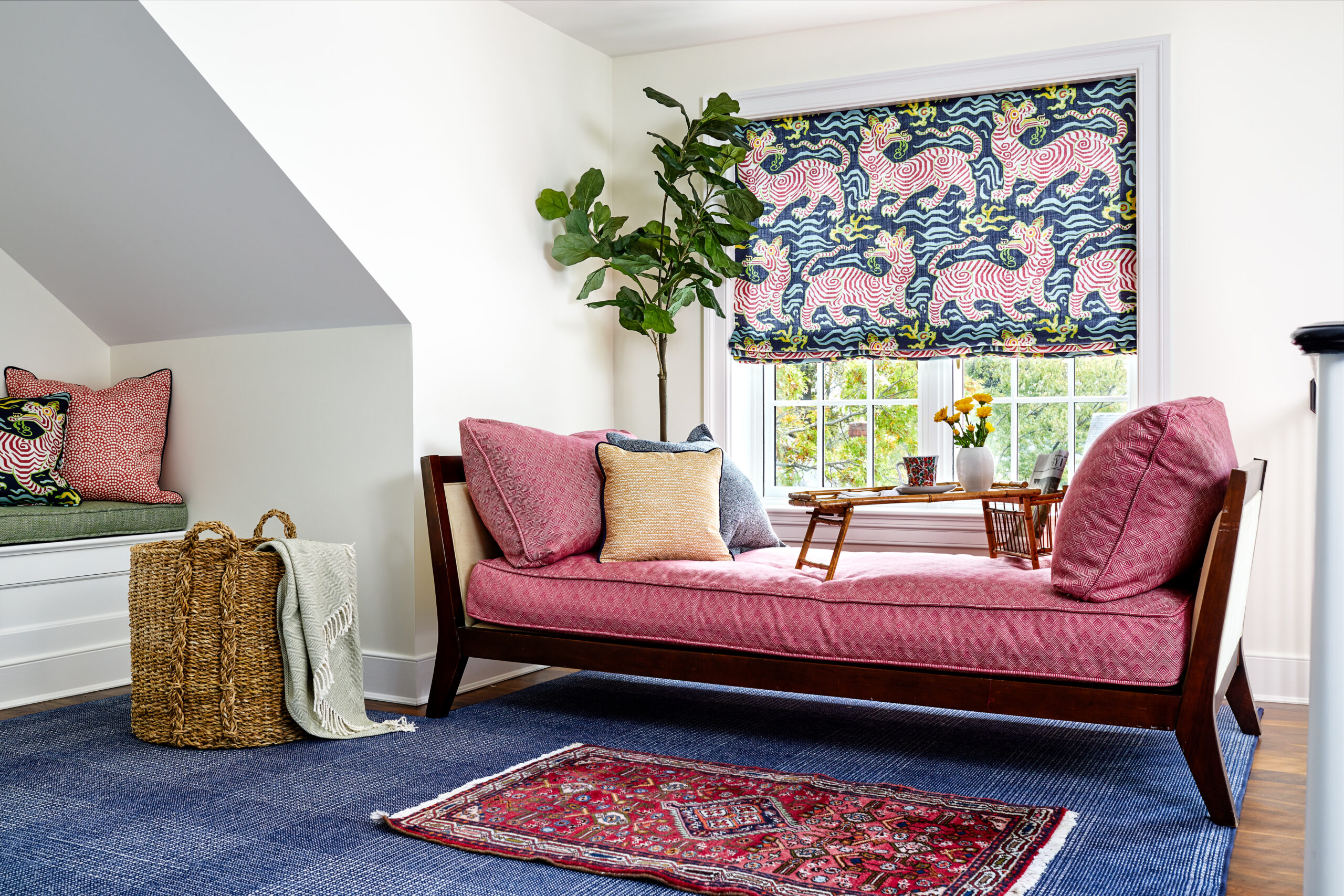
Pink and blue room with sitting area and window
Photo by Stacy Zarin Goldberg

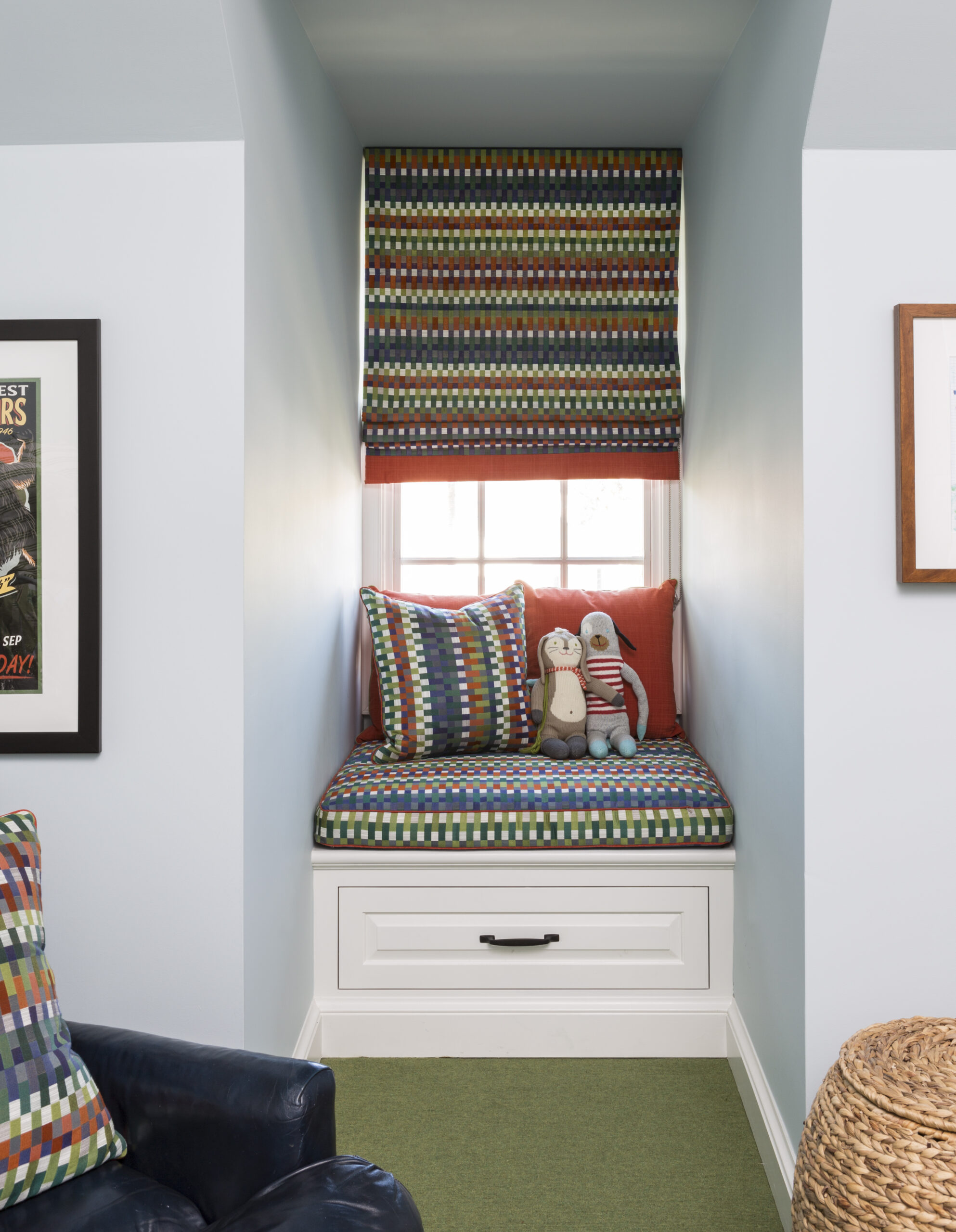
The modern version of Roman shades (string replaces slats) was created by Thomas Harris in 1808. I love the fabric version,
Colorful nook with Roman shade
Photo by Angie Seckinger

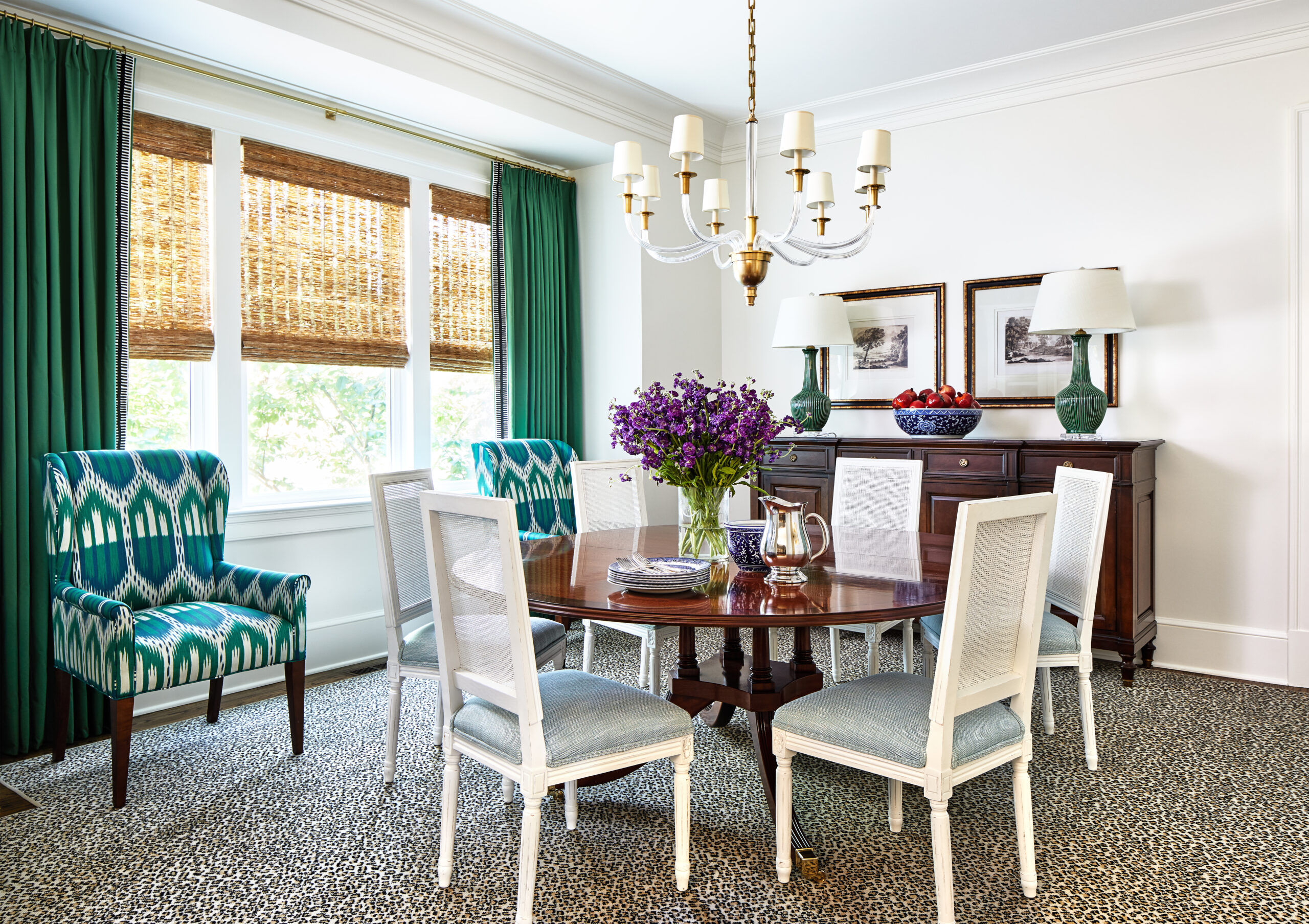
but “natural woven Roman shades,” made of bamboo or natural grasses, also have their place. I use either type of shade as a first layer under drapes, or in small rooms that can’t accommodate the volume of curtains, or just when I’m after a tidy look.
Dining room with natural woven Roman shades and green drapes
Photo by Stacy Zarin Goldberg

Drapes (or Curtains)

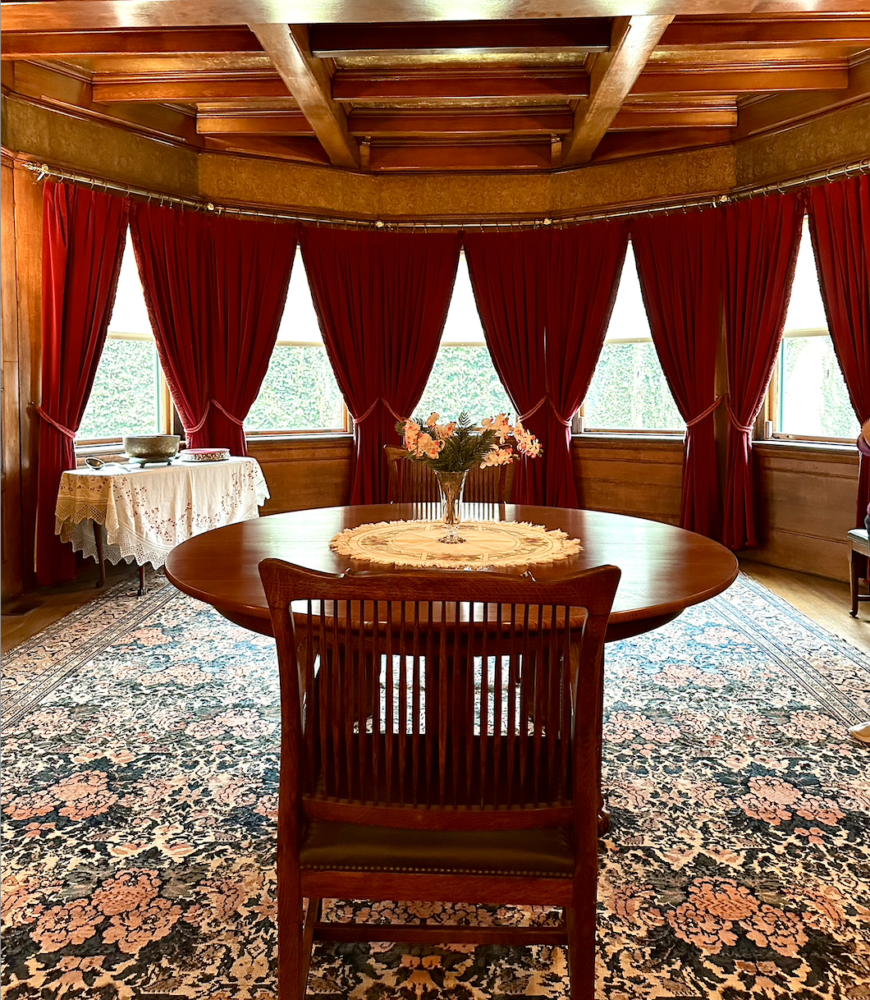
The Victorians recognized that floor-lengths drapes were pretty AND insulating against those dreary damp days.
Curved window with multiple drapery panels
Glessner House, Chicago

During the Victorian era (mid- to late-19th century), the fabric weaving process became more cost-effective due to the inventions of the Industrial Revolution. With the manufacture of synthetic dyes, fabrics became even less expensive — and more ornate and vibrant. (Fun fact: Designer William Morris REFUSED to stray from his beloved natural dyes, so his designs were not immediately popular, because they were too pricey.)

All of that = let’s use more fabric!
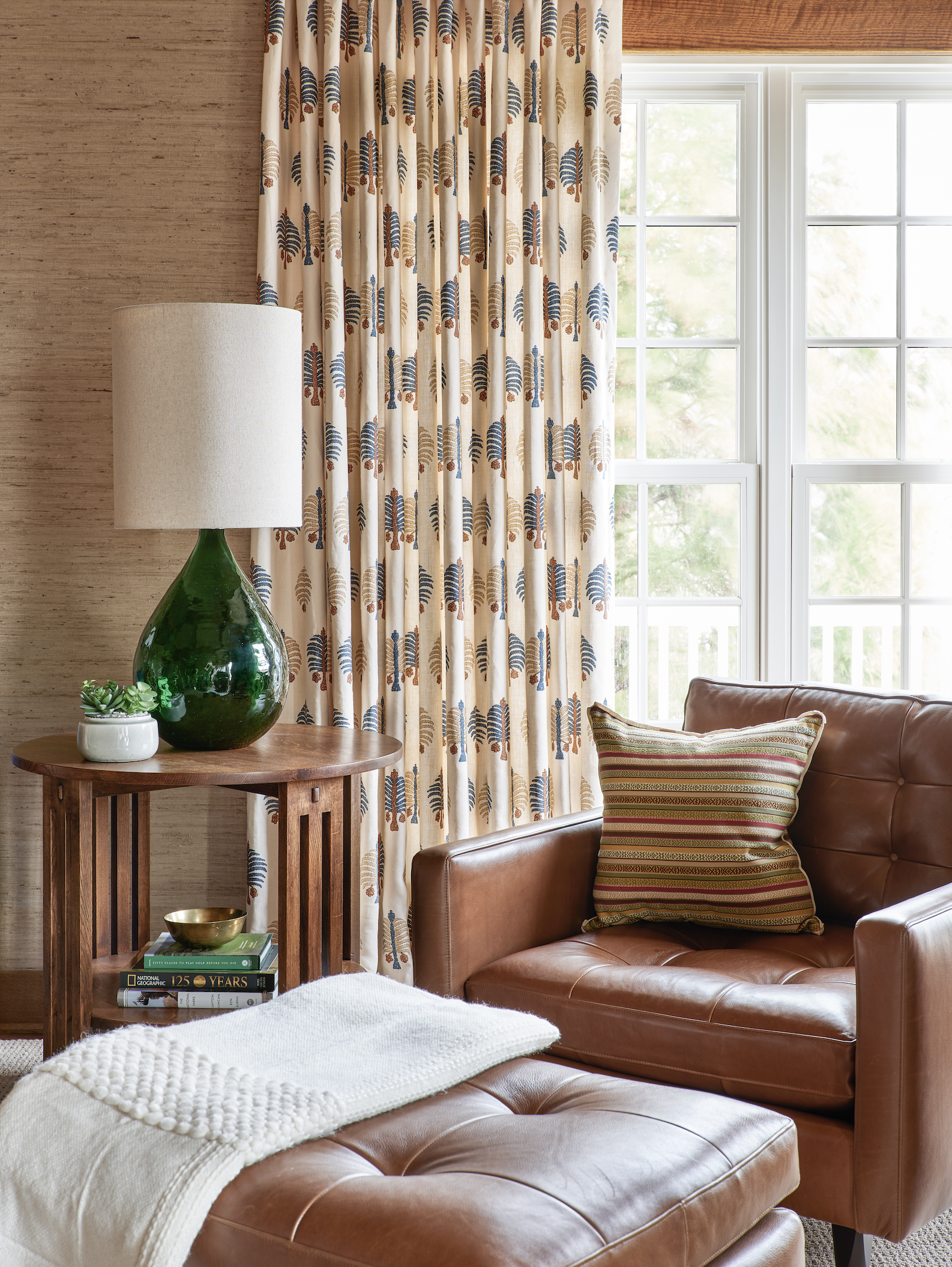
Leather chair and ottoman in front of  green lamp and window with drapes
This is not William Morris fabric ;) Photo by Angie Seckinger

Ornate fabrics were a popular way to display wealth. But Victorians used drapes for warmth, privacy, and to protect objects from sun damage. Sometimes, they used them to divide rooms.
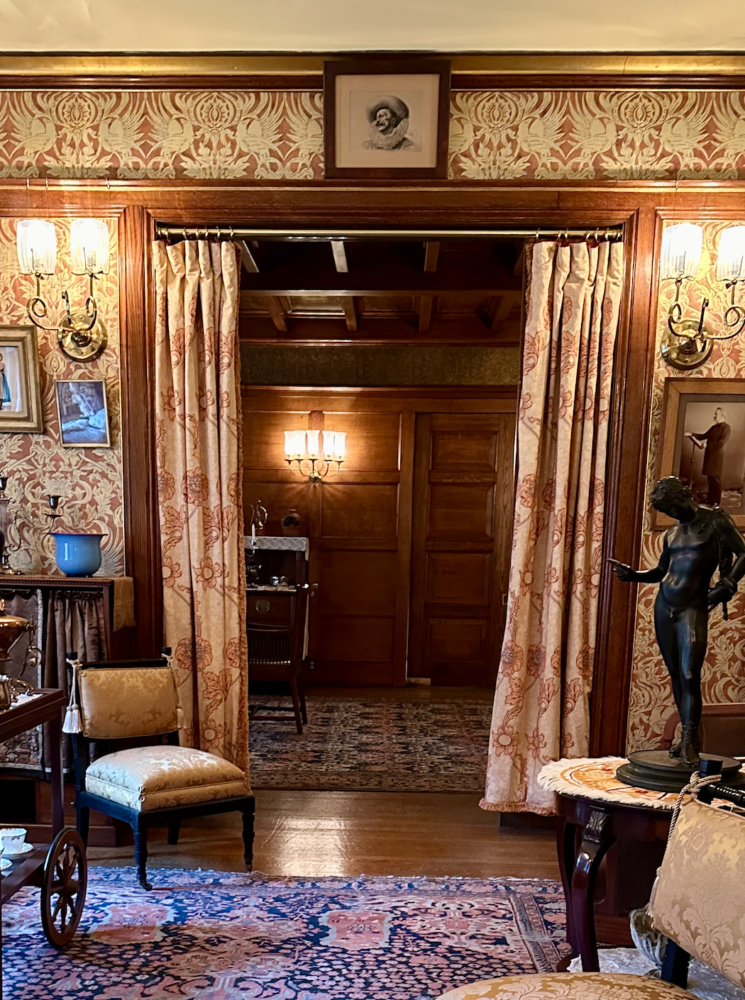
Victorian room with drapes curtains between rooms in a door frame.
Glessner House, Chicago

I love the drama of a floor-length drape but tend to gravitate towards lighter weights and patterns than Queen Victoria’s velvet.
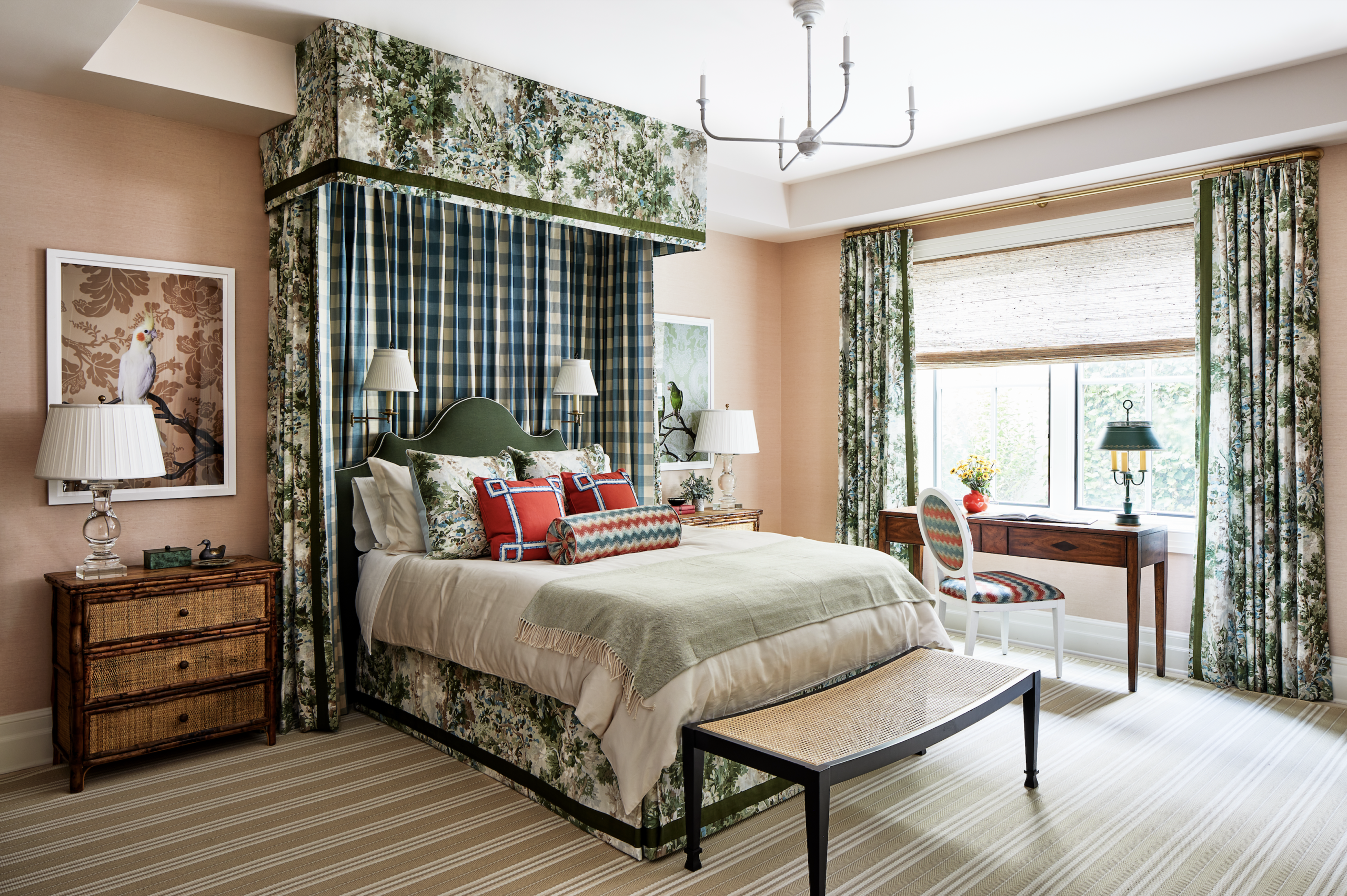
Bedroom with canopy bed and green and white drapes
Cowtan & Tout’s Rutledge fabric. Photo by Stacy Zarin Goldberg

Café Curtains

(AKA Brisbees, but since practically no one else uses that term, I may have to revert to “café curtains,” or, better yet, “short curtains.” Would that catch on, do you think?)

Despite being a French staple, café curtains actually were invented in 19th-century Vienna. These simple yet effective sill-length window treatments shielded diners from curious passers-by while allowing light in from above.
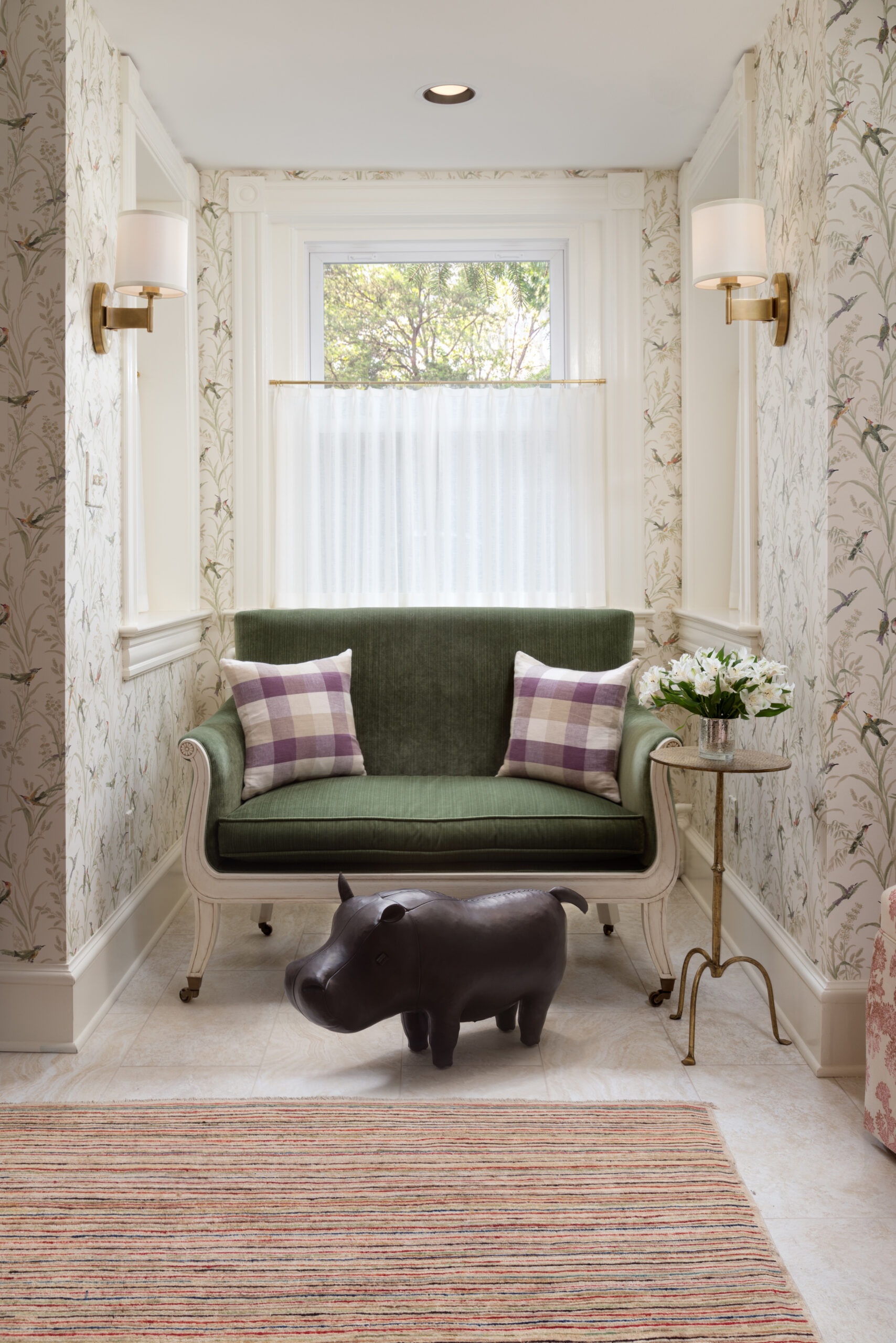
Sitting area with cafe curtain, sofa, and hippo footstool
Photo by Jenn Verrier

Today, I use short curtains ;) often, especially in bathrooms, on stair landings, under floor-length drapes, and over kitchen sinks. You may remember short curtains from your youth, when your mother paired them with matching valences above. The valences have gone by the wayside, fortunately!
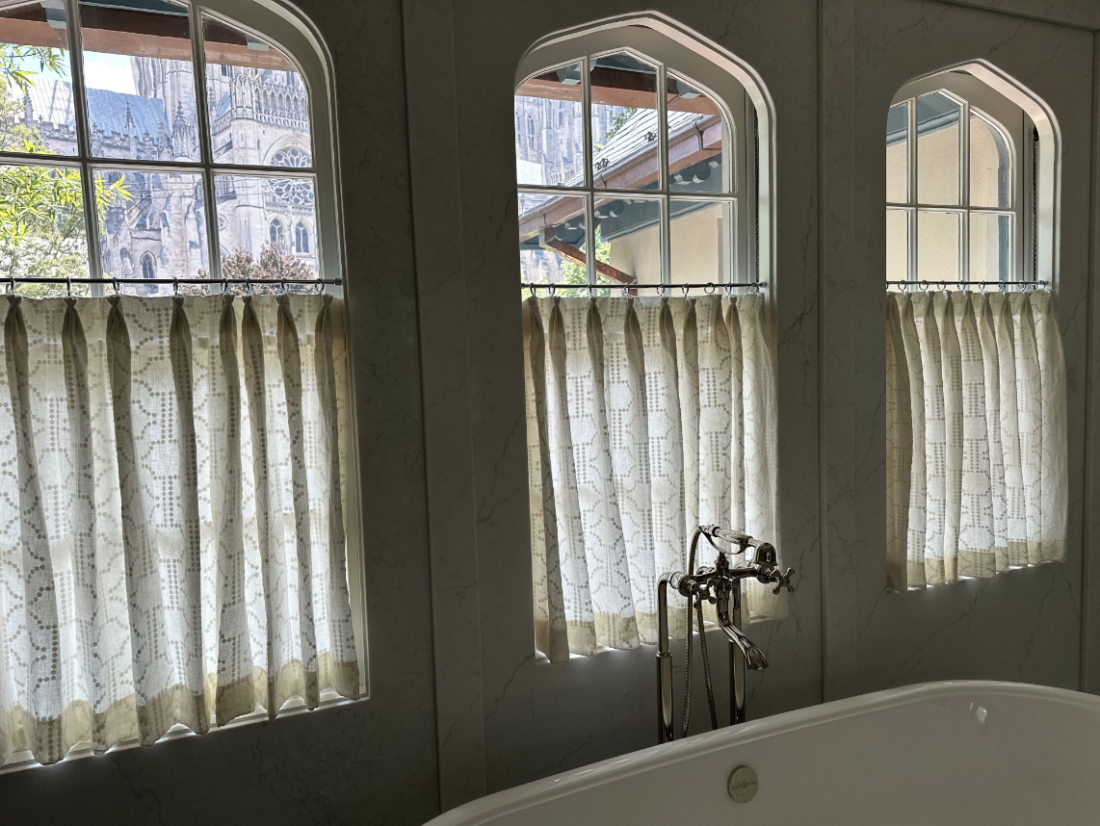
Cafe curtains in a bathroom over a bathtub
Annie Elliott Design

Oh, Gentle Readers, I could go on! But I think that’s enough history for today. Please know that from a decorating standpoint, window treatments are a fabulous investment. They complete a room, they provide light control, and, of course, they prevent your neighbors from seeing you naked.

Annie Elliott Design is a Washington, D.C based firm, but we also love working in NYC and on Maryland’s Eastern Shore. We’re booking projects for late spring/early summer 2026. Please contact us to discuss.

Category: Art, Window treatmentsTag: cafe curtains, curtains, history of window treatments, Roman Shades, venetian blinds, Victorian, window treatments

Sidebar

Subscribe


Bossy Color Blog

Categories

  • Art + accessories »
  • Bedroom »
  • Color + paint color »
  • Dining room »
  • Furniture + upholstery »
  • Kids »
  • Kitchen + bath »
  • Lighting »
  • Living Room + Family Room »
  • Renovation »
  • Rugs »
  • Wallpaper »
  • Window treatments »

View Portfolio

view Bossy Color's portfolio

Instagram

annieelliottdesign

View Instagram post by annieelliottdesign

Apr 30

Open post by annieelliottdesign with ID 18088806227011860
Florals? For spring? Groundbreaking.But nothing says spring like flowers! 🌷 🌻 🌸 (And birds!)

annieelliottdesign

View Instagram post by annieelliottdesign

Apr 28

Open post by annieelliottdesign with ID 17870996082665526
Your house should reflect *you*. My recent visits to Eudora Welty’s house and the Mississippi Museum of Art reminded me of that. If the wallpaper you put up makes you happy, it’s a success! If you need help figuring out how to translate your personality and lifestyle into your home’s function and appearance, I’m here 😉.Read my new blog post for more!

annieelliottdesign

View Instagram post by annieelliottdesign

Apr 24

Open post by annieelliottdesign with ID 18099336653042952
Annie Elliott Design is a proud sponsor of the 87th annual @flowermartdc! I hope to see you all there! I will be there on May 1st shopping for peonies, yellow roses, and Black-Eyed Susans. 🌸 🌹 💐 #flowermartdc #springflowers #interiordesign

annieelliottdesign

View Instagram post by annieelliottdesign

Apr 22

Open post by annieelliottdesign with ID 18064935869348067
The star of today’s Wallpaper Wednesday is Farrow & Ball’s Lotus!The dramatic Lotus pattern is in the Art Nouveau style of the late 19th century and veeeeery early part of the 20th. (The pattern’s curved, stylized, botanical shapes are a classic indicator of Art Nouveau style.) Today, Lotus wallpaper is available in 19 colorways — or coloUrways, since Farrow & Ball is British ☺️ — and the metallic ones are quite spectacular. F&B changes its wallpaper colorways with annoying regularity; once they cease making a paper, that colorway is considered “archived.” But fear not: ANY F&B wallpaper pattern can be made in ANY F&B paint…all it takes is time and money.If you’re a Succession fan (I struggled, but I made it through), you may remember Lotus from Season 3, in Rava Roy’s foyer.#interiordesign #wallpaper

annieelliottdesign

View Instagram post by annieelliottdesign

Apr 20

Open post by annieelliottdesign with ID 18113514817783580
You know my thoughts about small rooms and wallpaper: bold, large-scale paper totally works! Your gateway drug is powder rooms. They’re the perfect place to experiment with whimsical patterns and bright colors because you don’t spend a ton of time in there. Although * I * argue that when you have the right wallpaper, you’ll want to ;)

annieelliottdesign

View Instagram post by annieelliottdesign

Apr 8

Open post by annieelliottdesign with ID 18338258239300458
When you come home after a long day, do you want your foyer to rev you up or calm you down? Decide which approach you need and run with it. Add large-scale wallpaper and layered rugs for excitement, or paint the walls off-white and be selective with your artwork and mirrors for calm. #foyer #homedesign #foyerinspiration

annieelliottdesign

View Instagram post by annieelliottdesign

Apr 1

Open post by annieelliottdesign with ID 17918392215338642
This will come as no surprise, but I think about window treatments a LOT. Especially during the transition from winter to spring, with the change in temperature and light…I’m reminded what a critical design element window treatments are. And then I get to thinking about window treatments through the ages. Who invented drapes? Did the Romans *really* invent Roman shades?I decided to do some digging. Check out my blog to see what I discovered!📸 @stacyzaringoldberg📸 @jennverrierphoto#windowtreatments #drapes #interiordesign

annieelliottdesign

View Instagram post by annieelliottdesign

Mar 25

Open post by annieelliottdesign with ID 18088729466185965
It’s Wallpaper Wednesday! Today we feature Brunschwig & Fils’ Les Touches. @brunschwigfils introduced Les Touches in 1965, and the pattern soon became a Brunschwig classic. (Interestingly, “touches” translates to “keys” or “strokes…” I guess that’s close to “dabs,” which is what I’d assumed.) According to handwritten records, Les Touches is inspired by post-WWII black and white photographs, but the connection between this inspiration and the pattern remains a mystery. Referred to most often as a stylized animal print, Les Touches is a staple of the Le Jardin Chinois collection.Today, Les Touches comes in 18 colorways, but the blue colorway remains iconic. I’ve used Les Touches for window treatments and upholstery, but I can’t wait to try it as wallpaper!

annieelliottdesign

View Instagram post by annieelliottdesign

Mar 23

Open post by annieelliottdesign with ID 17860517745617635
Let’s talk about what fabric doesn’t work ❌ for the Roman shades in this teenage girl’s bedroom with 2 big windows and a statement ceiling. Even though these fabrics are beautiful on their own… they don’t work here. Biggest mistake: repeating the same motif (moths, butterflies, etc.) across the room. It starts to feel themed instead of designed.Watch part 1 for the full context, and watch part 3 to find out what I would choose.#interiordesign #wallpaper #interiorsandhome
Follow

Looking for something?

Don’t miss a single post


Where classic and modern hang out and drink gin.

  • Instagram
  • TikTok
  • Pinterest
  • Facebook

© 2026 · Annie Elliott Design · privacy policy