• Skip to main content
  • Skip to header left navigation
  • Skip to header right navigation
  • Skip to site footer
  • about
    • services
    • team
  • portfolio
  • press
Annie Elliott Design, Washington DC

Annie Elliott Design

Greater Washington DC

  • book
  • blog
  • contact

The Magic of Mirrors: My Big Takeaway from a London House Museum

Annie Elliott | February 22, 2026

Imagine you live in a row house in 1790s London, Gentle Readers. (Actually, it was several connected row houses by the 1820s, but that’s beside the point.)

Imagine that it is lit by oil lamps and candles. Further imagine that you are the collector of fine and interesting art and objects that you would like to be able to see.
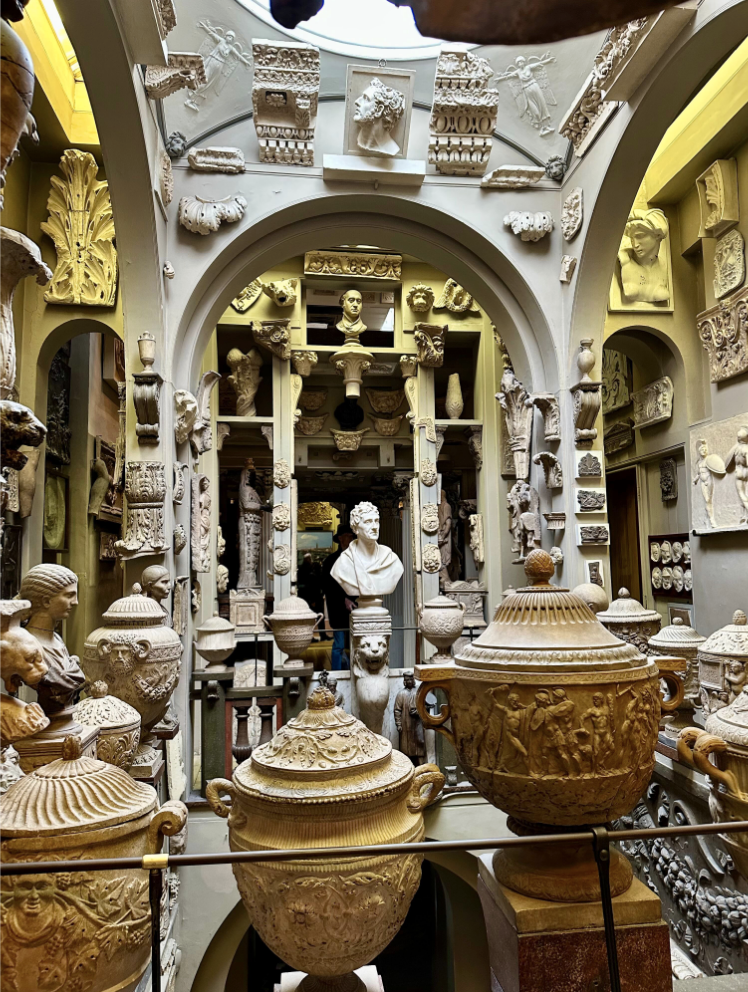
Museum room crowded with antiquities, statues, architectural elements.

What’s a Regency-era-mansion-dwelling-gentleman-collector to do?

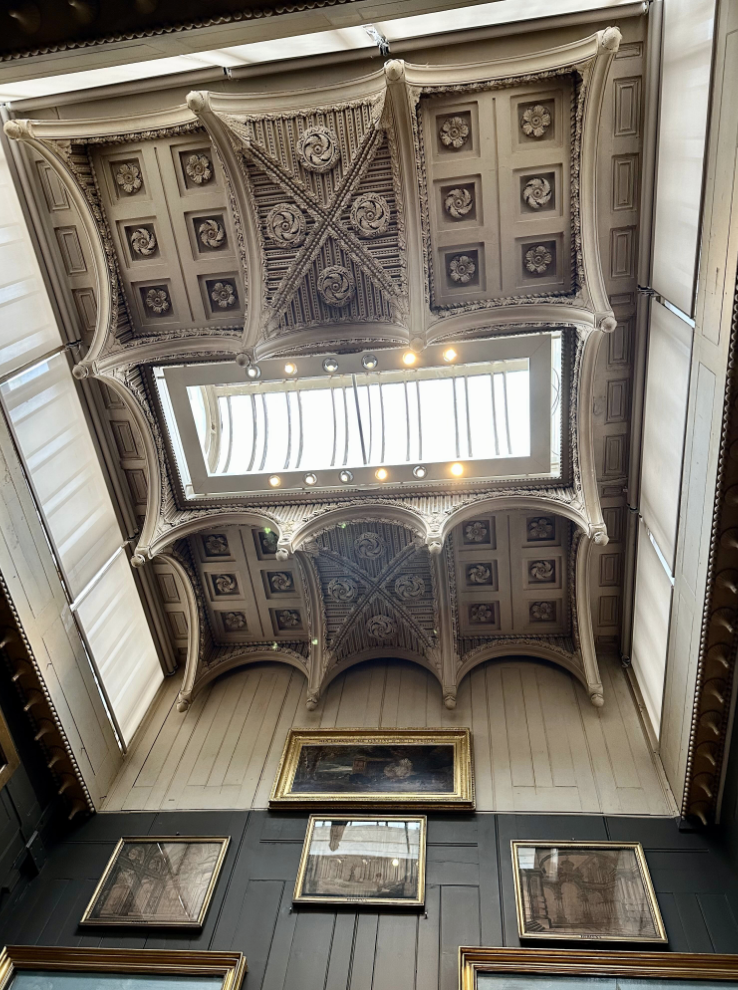
If you’re the English architect Sir John Soane, first you install skylights to bring as much daylight possible through all levels of the building. (Skylights were fairly new and very expensive back then, and few residences had them.)
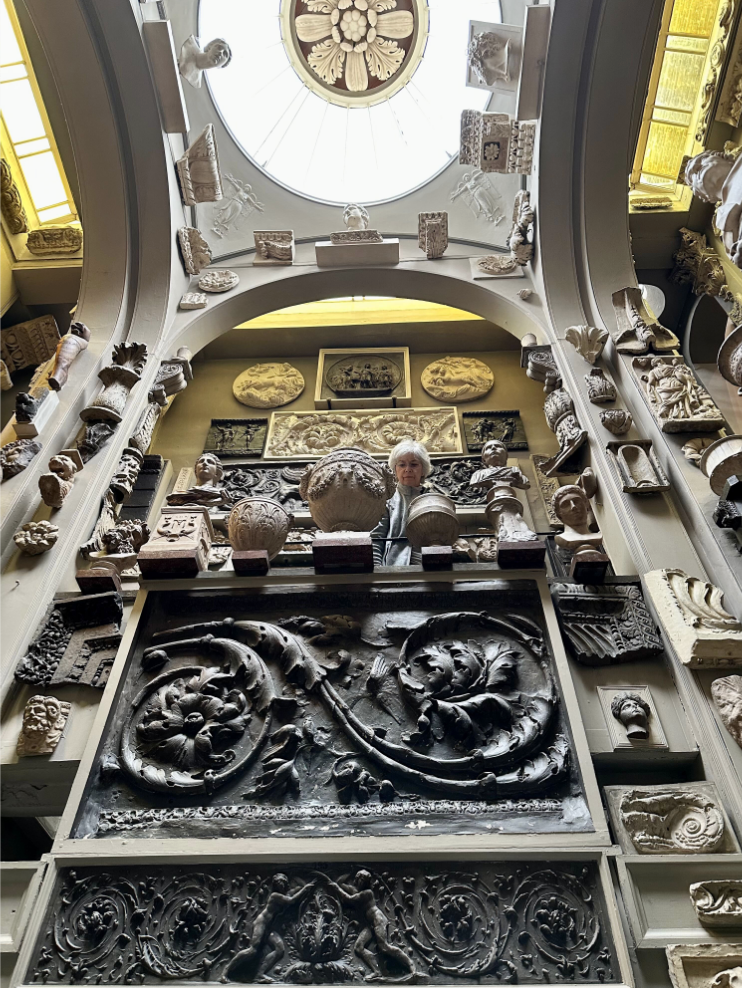
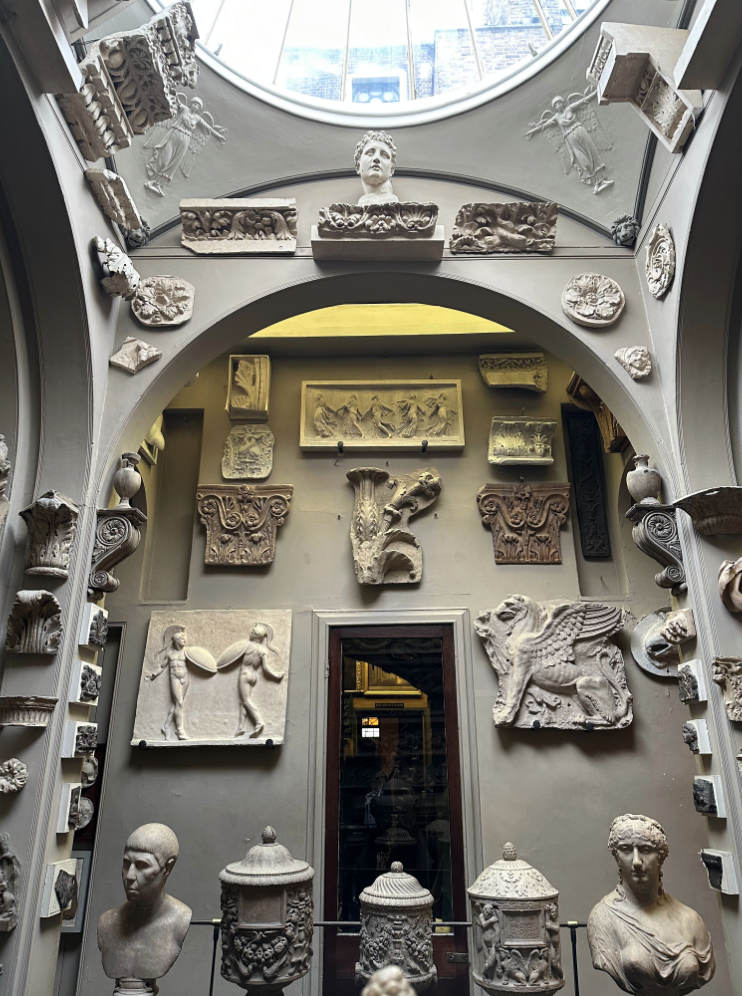
Museum room with domed skylight crowded with antiquities, statues, architectural elements.

I mean, you install skylights everywhere.
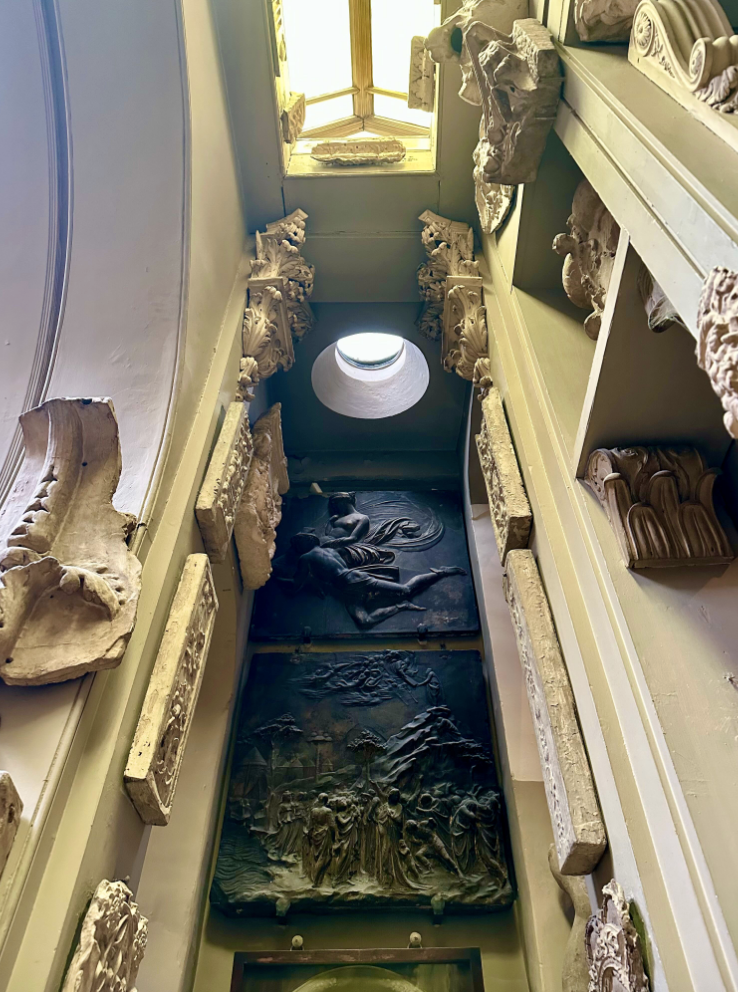
Museum room with small round skylight over antique architectural friezes, possibly bronze.

Domed, rectangular, large, small…all kinds. And again: everywhere.
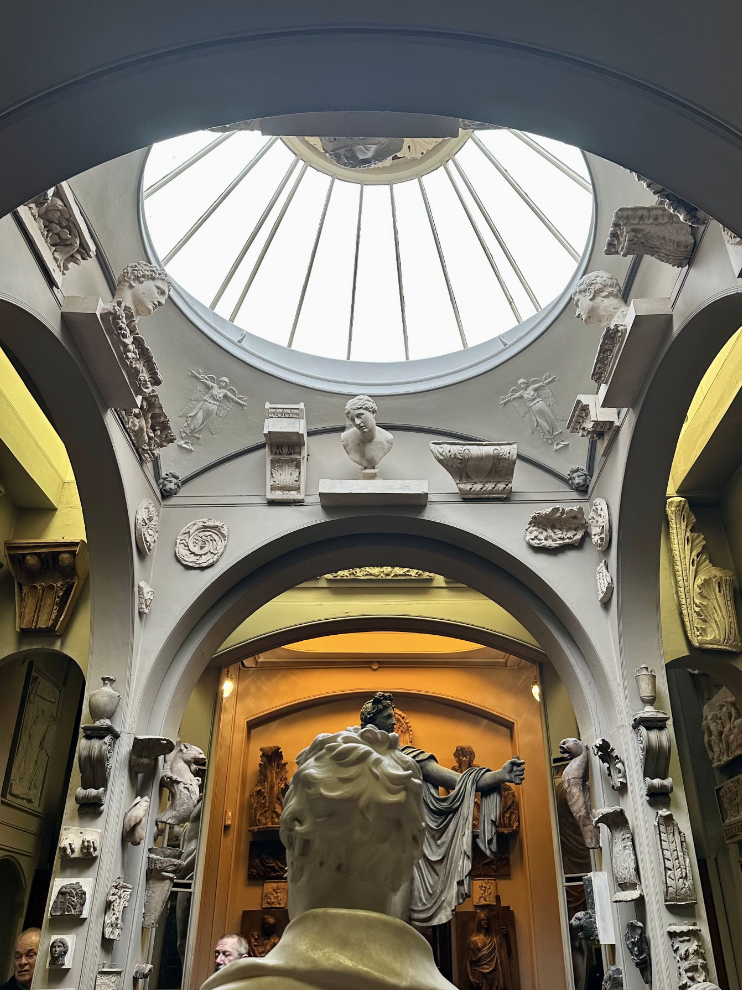
Museum room with domed skylight crowded with antiquities, statues, architectural elements.
Ornate tall coffered ceiling with large rectangular curved skylight
Ancient busts and architectural elements in skylight-lit small museum.

You even cut openings into the floors to coax light into the subterranean level,
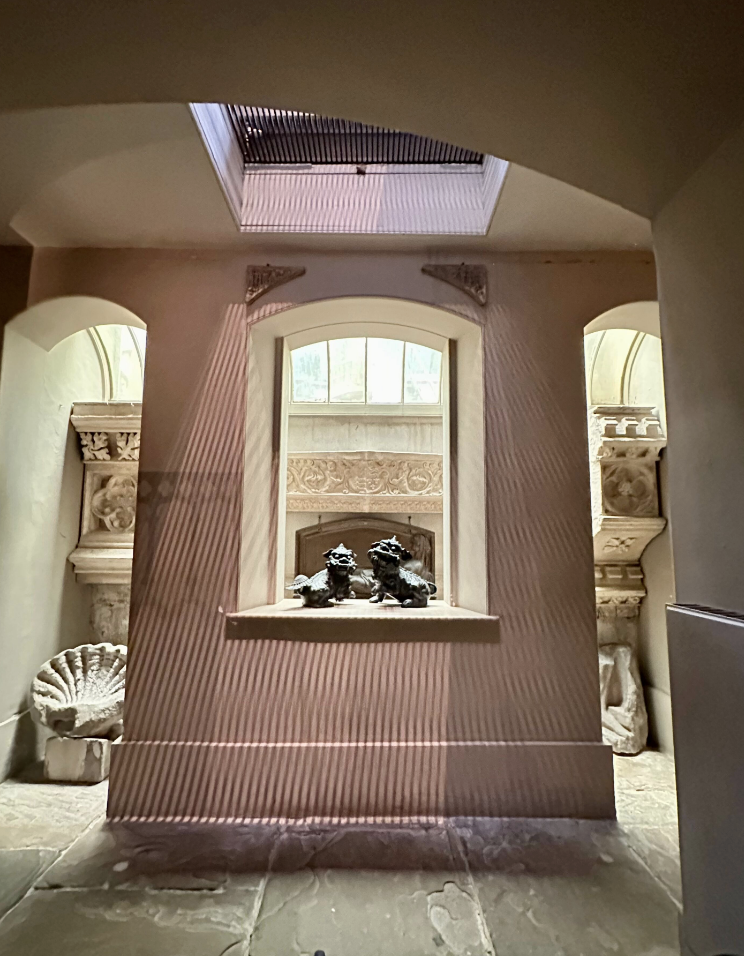
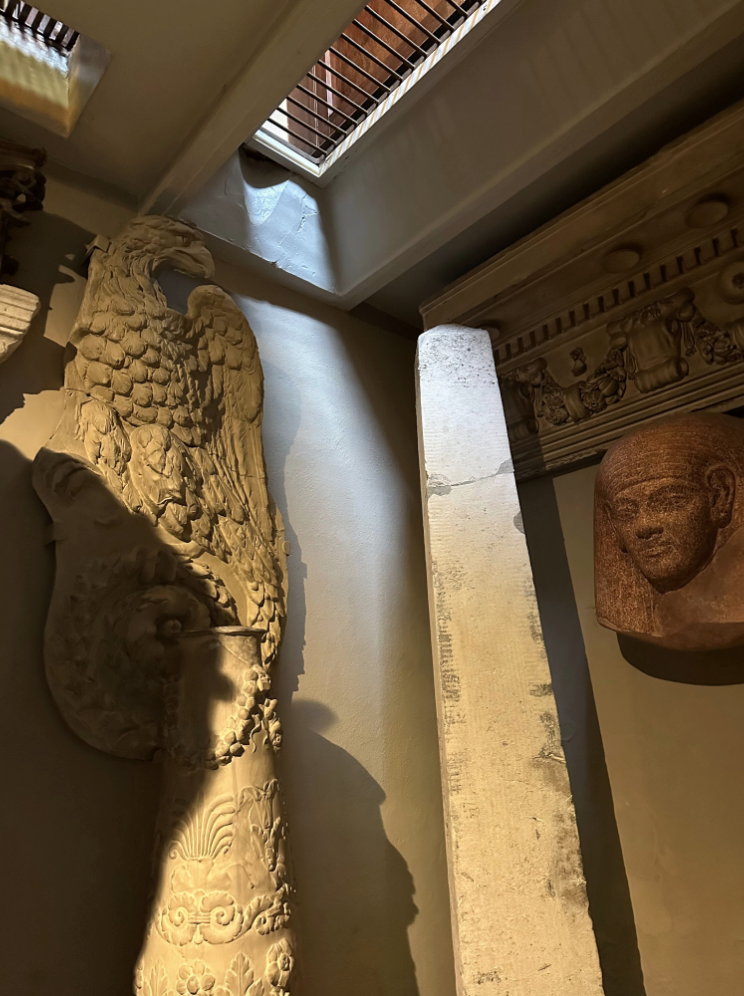
Basement-level museum room with antiquities and hole in ceiling with grille.
Basement-level museum room with hole in ceiling allowing light from room above.

and install slanted, conservatory-like windows between the courtyard and the rooms surrounding it.
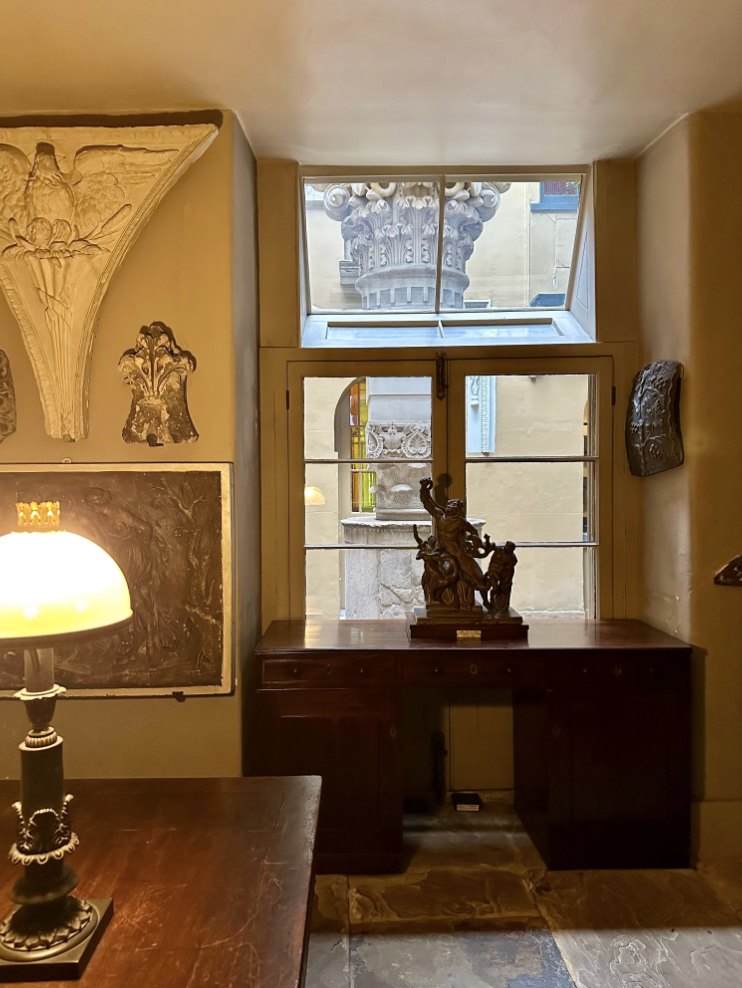
Room with window onto enclosed courtyard.

THEN, Gentle Readers, THEN you become something of a genius in your use of mirrors. Because skylights and windows work when there is daylight to be had, but when the sun goes down…what does one do then?

When I visited Sir John Soane’s Museum recently, I was blown away by the cleverness — and craftsmanship — that went into installing so many mirrors to maximize all light: from the sun, candles, and oil lamps.

We’re not just talking about a big mirror over a fireplace. We’re talking about integrating mirrors into the architecture. Stealth mirrors. I didn’t even notice most of them on first pass.

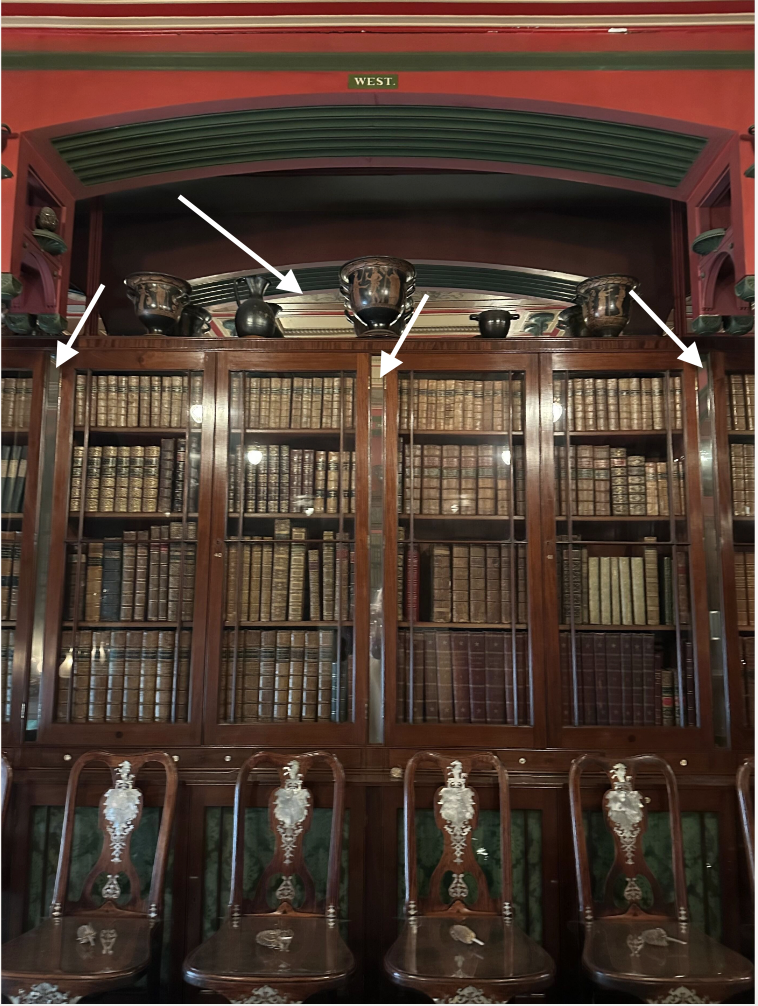
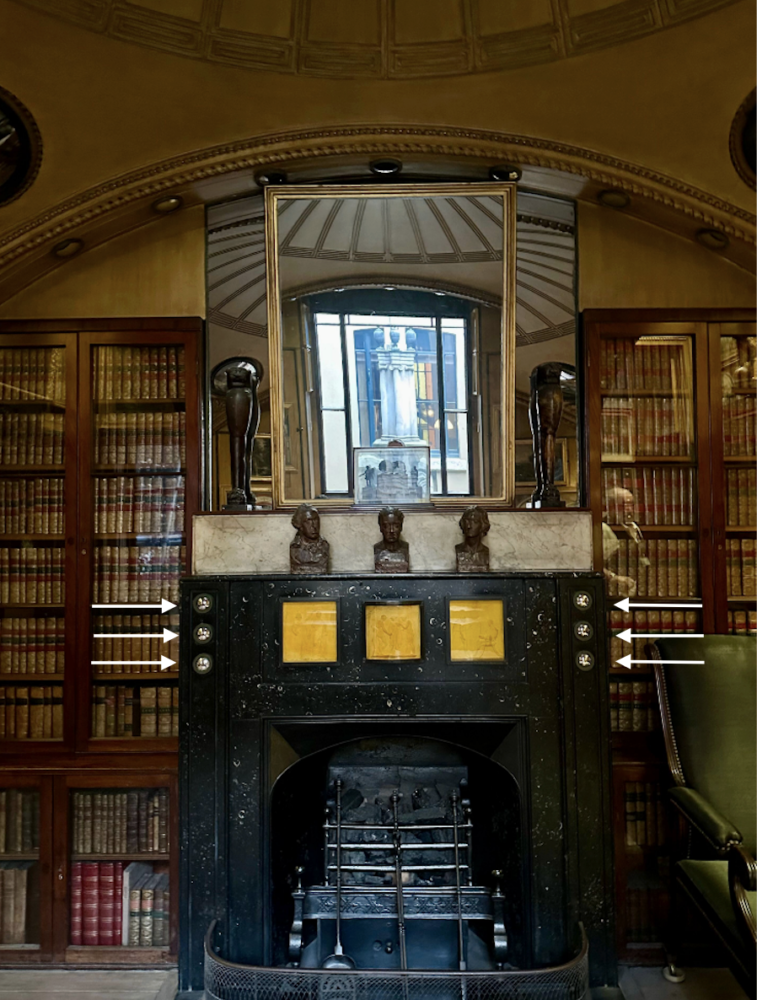
Here’s the library. How many mirrors do you see in this picture?
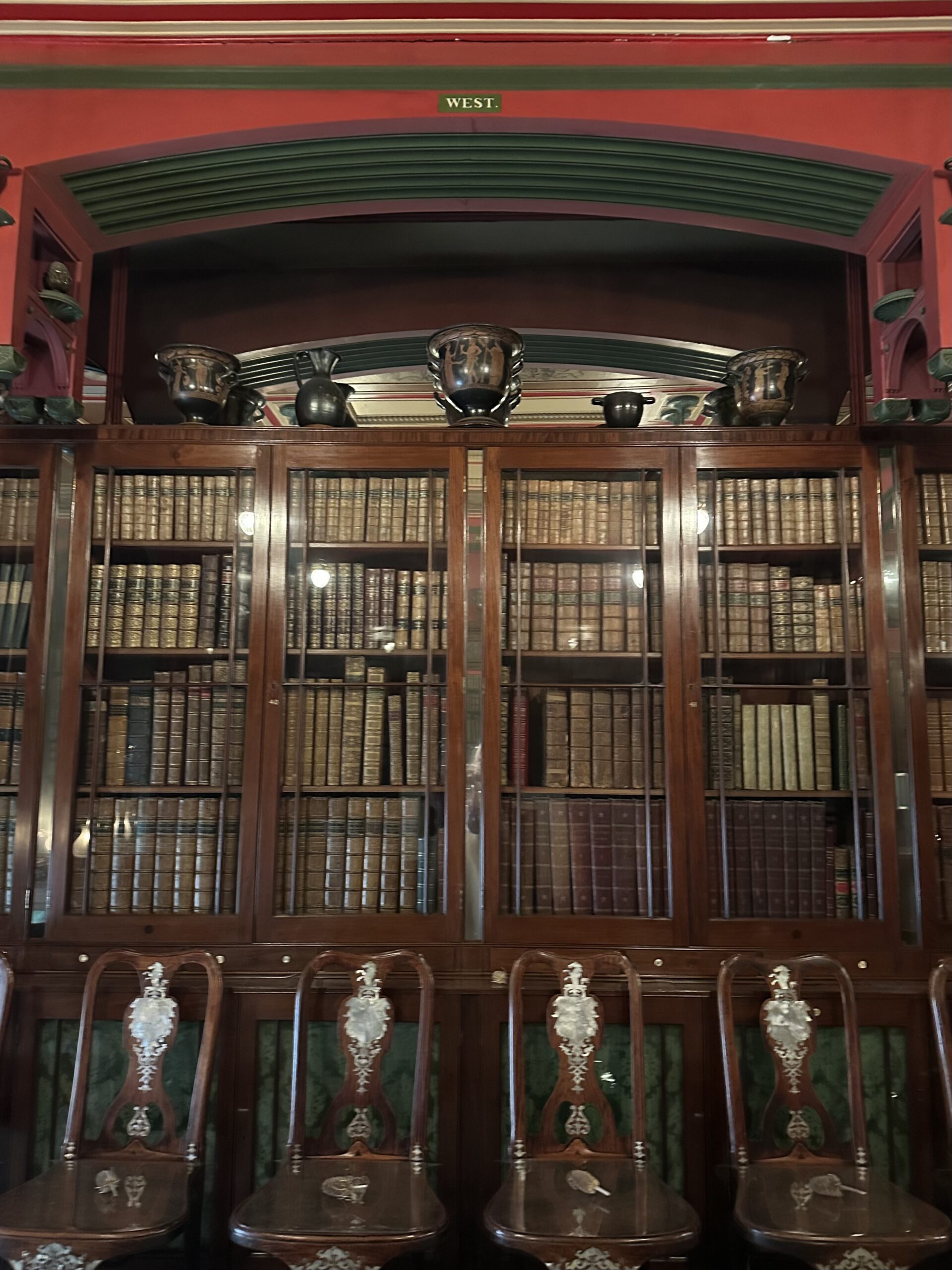
Historic library with vertical mirrors between bookcases and behind arch above.

There are four.

Historic library with vertical mirrors between bookcases and behind arch above and arrows pointing them out.

Ok, maybe that was a gimme.

But how about here, in the Breakfast Room? This sketch provides a better wide view than any photograph I took or found. This is from the museum’s website.
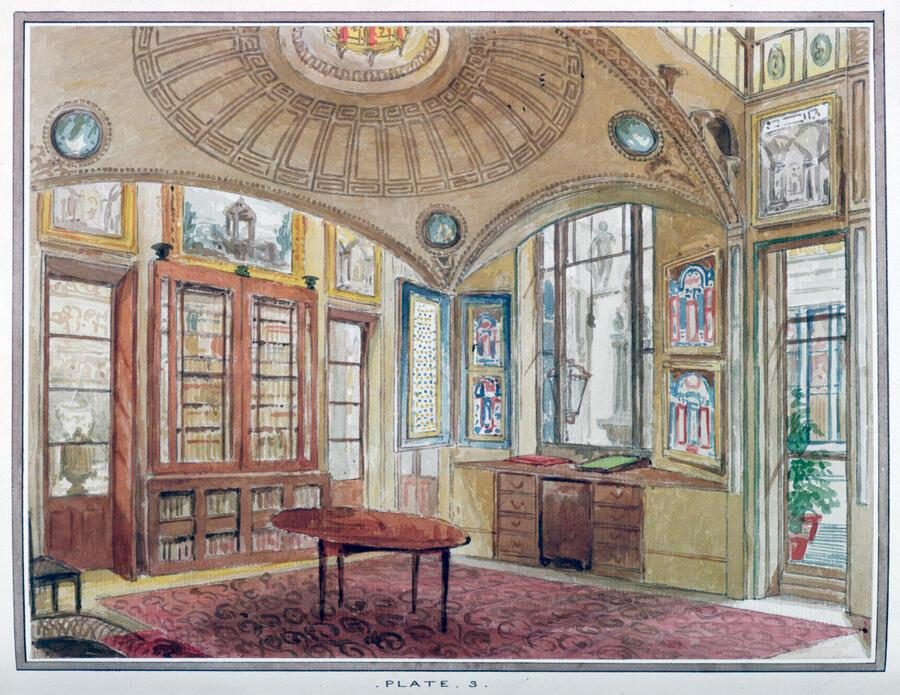
Watercolor sketch of airy, domed 18th-century breakfast room.

The small mirrors around the stained glass part of the domed ceiling are obvious,
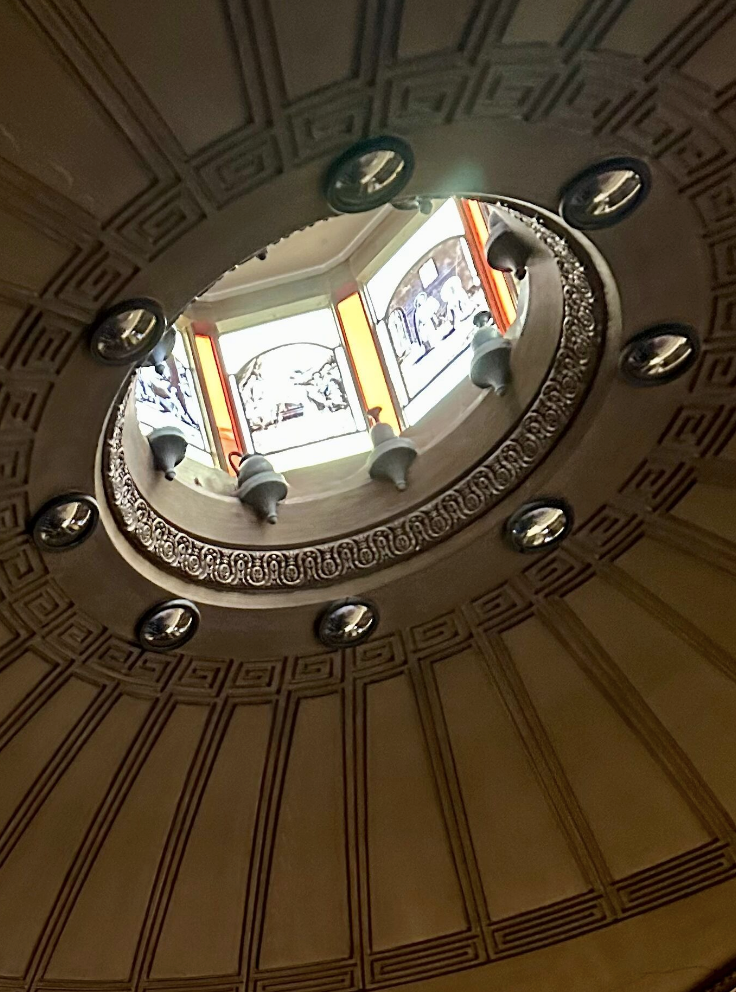
Domed ceiling with stained glass surrounded by mirrors

as are the large round mirrors below that.
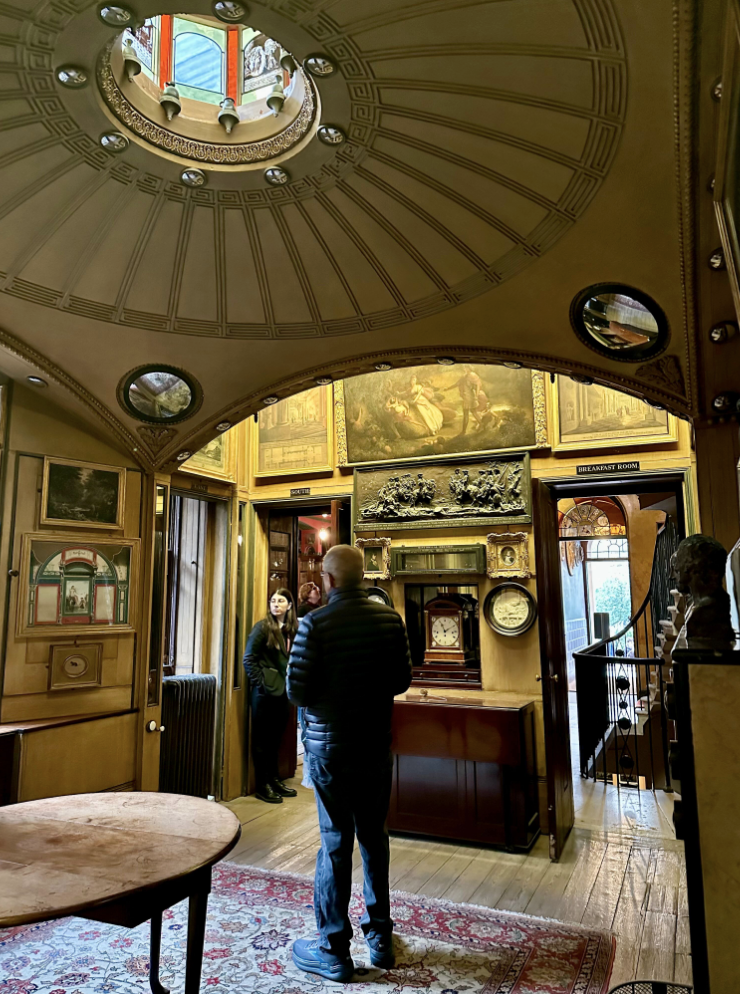
Room with domed ceiling with stained glass surrounded by mirrors

Less obvious, though, are the tiny mirrors in the arches and elsewhere. In this picture alone, you have 25:

Room with domed ceiling with stained glass surrounded by mirrors and arrows indicating mirrors

There are 6 more on the fireplace.

Fireplace with small convex mirrors on surround

You even tilt the mirror on the mirror above the fireplace to direct light down, to the tabletop — seated-person level.
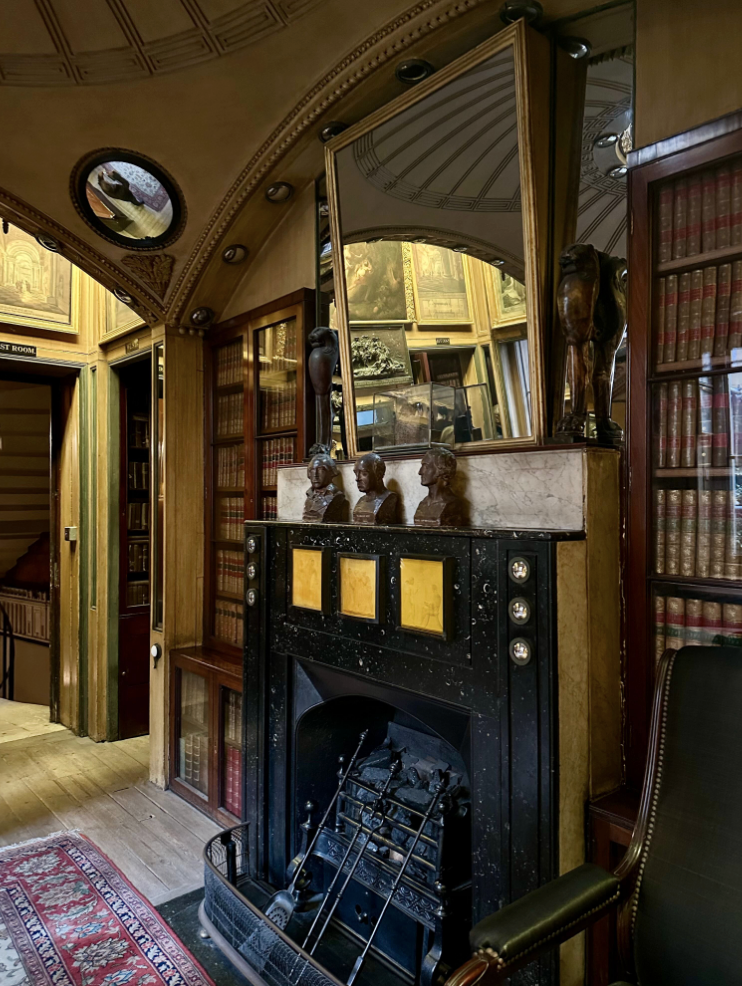
Fireplace with mirror over mirror above mantel

All in all, there are more than 100 mirrors in the Breakfast Room alone. I mean, the man wanted LIGHT.

Sir Soane took every opportunity he could to add mirrors to his museum/office/home, sometimes in an overt way,
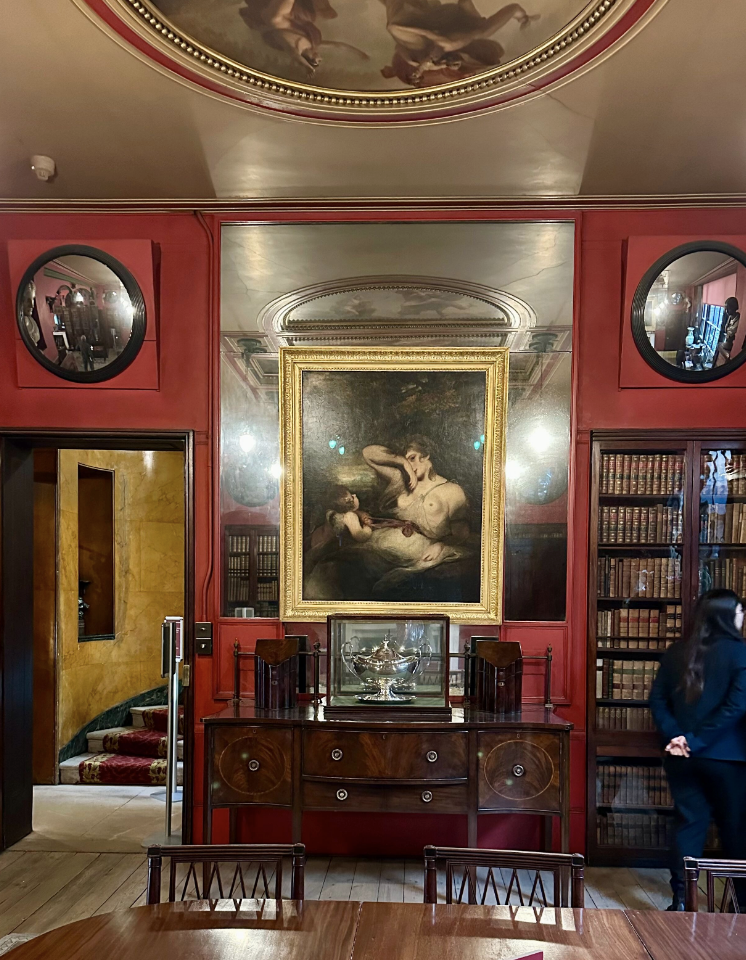
Red room with two convex mirrors and a painting hung on a mirror over a piece of furniture

and sometimes surreptitiously.

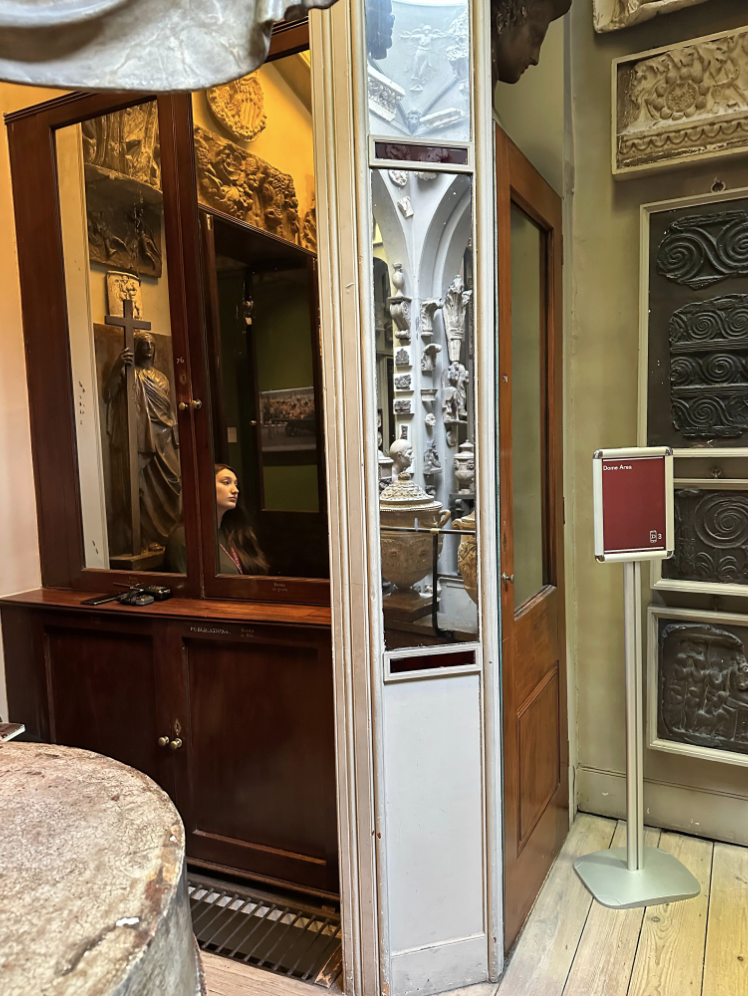
Hallway with mirrored door cabinet and mirrors on small angled wall

I’ll be honest: I rarely think about using mirrors as an architectural element. There have been a few times when I’ve installed a frameless, chimney-wide, mantel-to-ceiling antiqued mirror over a fireplace, on which I’ve hung a framed mirror or painting. That can look really nice.

But looky here! A mere few months after I visited Sir John Soane’s Museum, I had lunch at a darling restaurant in Holland Park. And what did I see?
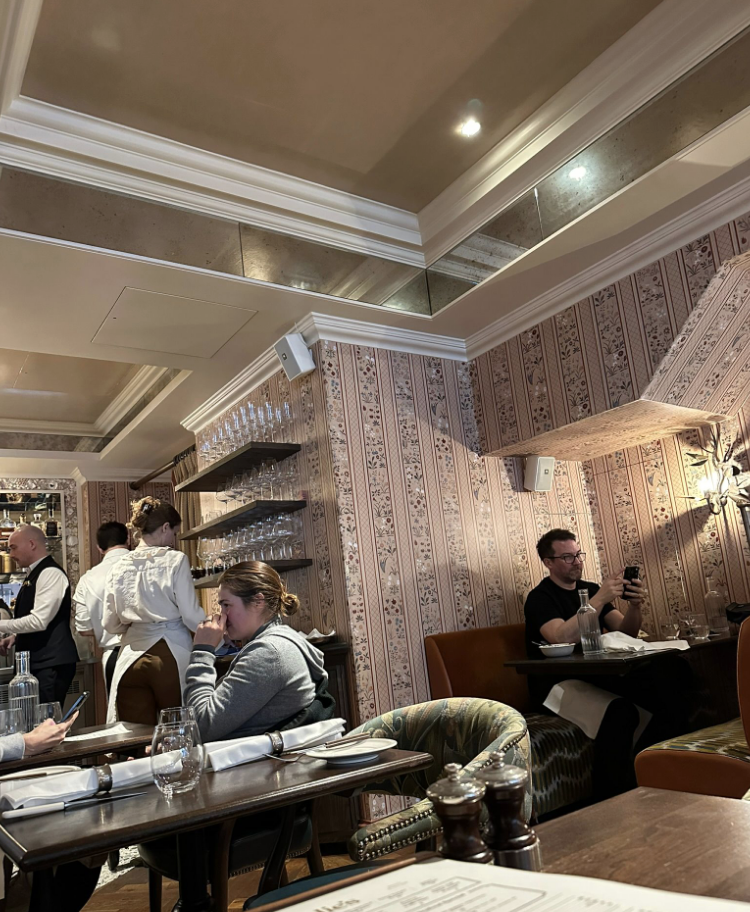
Restaurant with mirrors on fronts of soffits

Mirrors on the faces of soffits. Don’t miss the smaller ones at left, by the bar.

Subtle, right? Nay, innocuous? But the mirrors bring light and a bit of spaciousness to a smallish room with no side windows.

I bet I could pull this off in the right under-lit room. It’s something to think about, for sure.

Sir John Soane’s Museum is located at 13 Lincoln’s Inn Fields, London, WC2A 3BP.

Annie Elliott Design is booking projects for late spring 2026. Please contact us to discuss.

Category: Historic houseTag: 18th-century, 19th-century, antiquities, concave mirrors, historic house, London house museum, mirror over mirror, mirrors, Regency, Regency architecture, Sir John Soane's Museum

Sidebar

Subscribe


Bossy Color Blog

Categories

  • Art + accessories »
  • Bedroom »
  • Color + paint color »
  • Dining room »
  • Furniture + upholstery »
  • Kids »
  • Kitchen + bath »
  • Lighting »
  • Living Room + Family Room »
  • Renovation »
  • Rugs »
  • Wallpaper »
  • Window treatments »

View Portfolio

view Bossy Color's portfolio

Instagram

annieelliottdesign

View Instagram post by annieelliottdesign

Oct 21

Open post by annieelliottdesign with ID 17995465526842775
Happy Wallpaper Wednesday! This week, we dive into Martinique by CW Stockwell.This small, family-run print facility in Los Angeles was founded in 1905. Clifton Stockwell’s daughter and son-in-law traveled to the Bahamas in 1942 and were so enchanted by the foliage that they collaborated with illustrator and textile designer Albert Stockdale to create a wallpaper pattern. The result was Martinique — also known as “The Original Banana Leaf Print.” (Martinique is not to be confused with Brazilliance by Dorothy Draper 😉 .)Martinique famously adorns the Beverly Hills Hotel’s halls, stairwells, and Fountain Coffee Room.CW Stockwell now sells the Martinique pattern in seven colorways as wallpaper, grasscloth, and linen fabric.@cwstockwell @scalamandre#interiordesign #wallpaperinspo

annieelliottdesign

View Instagram post by annieelliottdesign

Oct 19

Open post by annieelliottdesign with ID 17884583844691170
I love this cocoon of a bedroom :) And what makes it REALLY interesting? The red lamps. There’s no other red in the room. Oranges, yes, so the red has something to relate to, but the exact shade appears nowhere else.It’s these unexpected elements that can take a room from beautiful to fabulous.Hats off to: @visualcomfort @cowtanandtout @cowtanwashingtondc#dcdesigner #interiordesign

annieelliottdesign

View Instagram post by annieelliottdesign

Oct 16

Open post by annieelliottdesign with ID 17947598421345387
I stand by my decision to drywall the window 🤭. See how we created a dark and cozy boudoir in a spacious sunny condo in DC…#interiordesign #dcdesigner

annieelliottdesign

View Instagram post by annieelliottdesign

Oct 14

Open post by annieelliottdesign with ID 18133519813736018
Your bed is the biggest piece of visual real estate in your bedroom. It needs pillows! Check out my latest blog post for ideas about arranging pillows on your bed 🛏️.

annieelliottdesign

View Instagram post by annieelliottdesign

Oct 7

Open post by annieelliottdesign with ID 18635567182053307
Happy Wallpaper Wednesday! Today we’re talking about one of my favorite things in the whole world: grasscloth. (Which technically makes today *Wallcovering* Wednesday, but tomayto tomahto.) Most grasscloth is made of actual grasses that have been washed, dried, bleached or dyed, and glued to paper. Wallcovering made of sisal, seagrass, raffia, or hemp also is placed under the heading “grasscloth.” Talk about timeless style: while grasscloth had a popularity surge in the 1960s and 70s (thanks to a cultural obsession with living in nature), its first known use was in 107 AD, in China ;) Grasscloth has long been appreciated for its insulative properties and durability. From a decorating perspective, I love it because it adds warmth, texture, and dimension to any space. Picture a room painted white, and then imagine that room with an off-white grasscloth on the walls (and, if you’re me, the ceiling). The second room is still light and bright, but it’s cozier and more interesting.Grasscloth can be minimalist in neutral earth tones or maximalist, dyed bold colors, colorfully painted, or appliquéd with spangles, embroidery, or tape trim. It shows its seams when installed, but that’s part of the charm. I love grasscloth in hallways, living spaces, and bedrooms, but I avoid using it in kitchens and steamy bathrooms because I’m nervous about odor retention and excessive moisture.Enough school for the day, but if you remember nothing else: grasscloth enriches every room it graces. Highly recommend.📸 Michael K. Wilkinson@schumacher_midatlantic @schumacher1889 @phillipjeffriesltd

annieelliottdesign

View Instagram post by annieelliottdesign

Oct 3

Open post by annieelliottdesign with ID 18482506054114649
You likely know where I stand on pillows: they NEVER should be an afterthought. Check out my latest blog post for recommendations on size, shape, style, and placement. Link in bio. 📸 @stacyzaringoldberg📸 @kipdawkinsphoto📸 @angieseckinger

annieelliottdesign

View Instagram post by annieelliottdesign

Oct 2

Open post by annieelliottdesign with ID 18103510994172389
This client’s gorgeous collection of gold icons in the bookcases puts this room in a league of its own. Whenever you have a collection — of ANYTHING: frog figurines, English engravings of flowers or dogs, snow globes — maximize its impact by bringing the objects together and placing them in a prominent place. These icons are breathtaking, and the sheer number invites you to go closer and study them. With reverence.#eastlake #vintagerug #antiquerug

annieelliottdesign

View Instagram post by annieelliottdesign

Sep 28

Open post by annieelliottdesign with ID 18630011602021777
Happy Fall! Ironic, isn’t it, that fall weather is cool, but the colors we associate with the season are warm? The earthy orange grasscloth in this foyer is undeniably “fall” to me. Add deep, warm versions of green and blue, et voilà: a cozy, inviting, autumnal space.

annieelliottdesign

View Instagram post by annieelliottdesign

Sep 23

Open post by annieelliottdesign with ID 17881497900529047
For this week’s Wallpaper Wednesday we go into the Woods… Woods is a great example of Cole & Son’s innovation in serigraphy, a traditional method of screen printing. The pattern is available on fabric and wallpaper in a variety of soothing yet elegant colorways. Due (I’m sure) to the booming success of the original, there are now some whimsical variations on Woods: Cole & Son added metallic stars to some colorways and pears to others. As you may imagine, however, this traditionalist prefers the original 🙂For some reason, Woods is especially popular for nurseries. Maybe those babies really wanted out of their cribs. 👶🏼In 2005, Woods deservedly won the ELLE Decoration International Design Award for Wallcovering of the Year. And it’s still going strong.
Follow

Looking for something?

Don’t miss a single post


Where classic and modern hang out and drink gin.

  • Instagram
  • TikTok
  • Pinterest
  • Facebook
American Society of Interior Designers Firm Partner

© 2026 · Annie Elliott Design · privacy policy