
Hello, Gentle Readers! Is it spring? Is it summer? What month is it? What year? Who’s to say? I’m so turned around that I’ve just been putting my head down and focusing on what I do best: spreading joy by making houses beautiful.
In doing so, I’ve noticed that there’s a type of window treatment that I’m really gravitating to right now: Curtains. Not to-the-floor drapes; curtains.
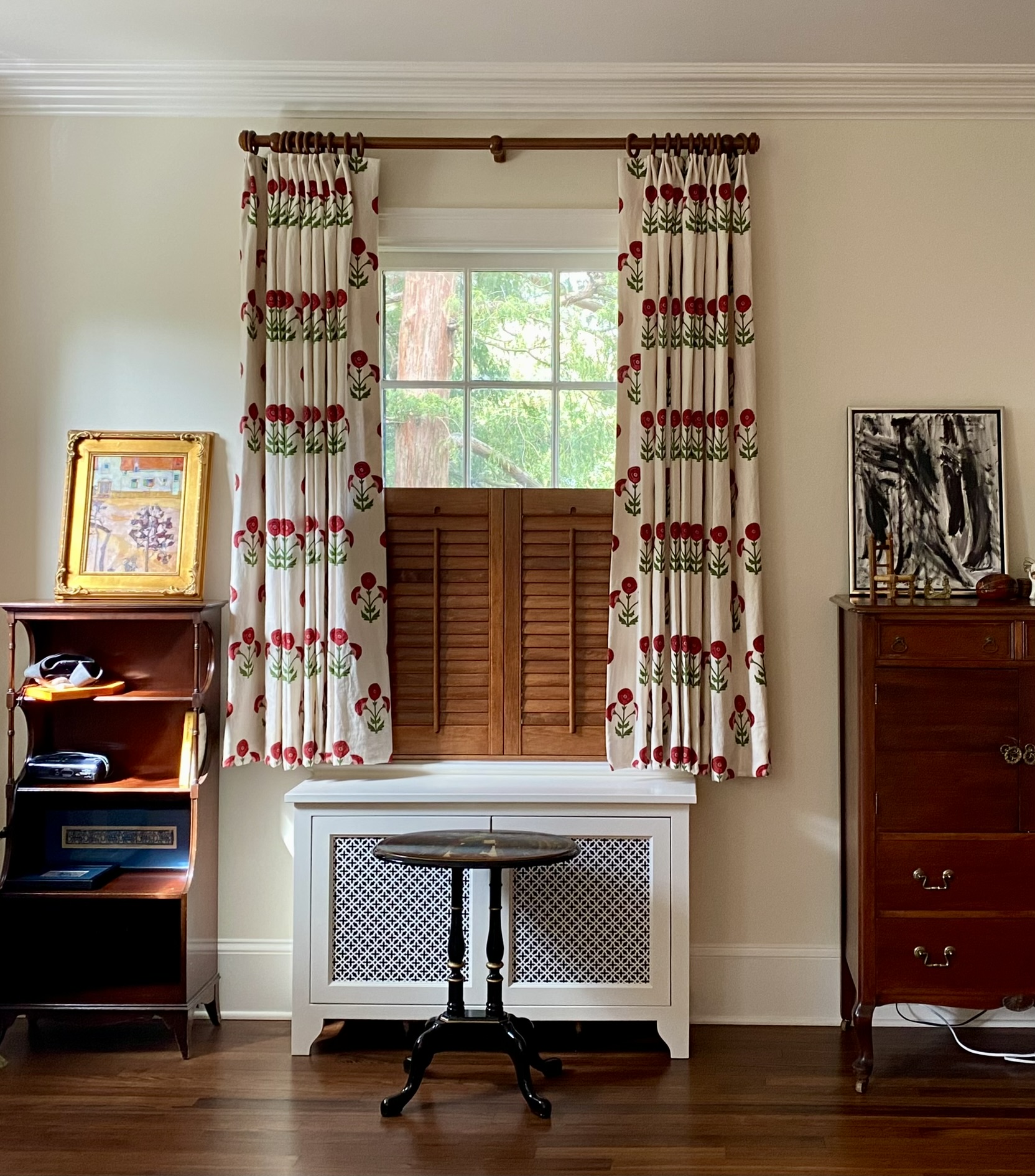
What’s the difference between drapes and curtains, you ask? A legitimate and reasonable question. Many people will say, “none.” They’re not wrong. I daresay most people — including interior designers — use “curtains” and “drapes” interchangeably. Or they have a very specific association with one word or another from childhood. There are hills to die on, and this ain’t one of ’em.
*I*, for reasons of clarity, have always considered floor-to-ceiling (or close to ceiling) fabric window treatments drapes, and sill-length (or just below the sill or apron) treatments curtains.
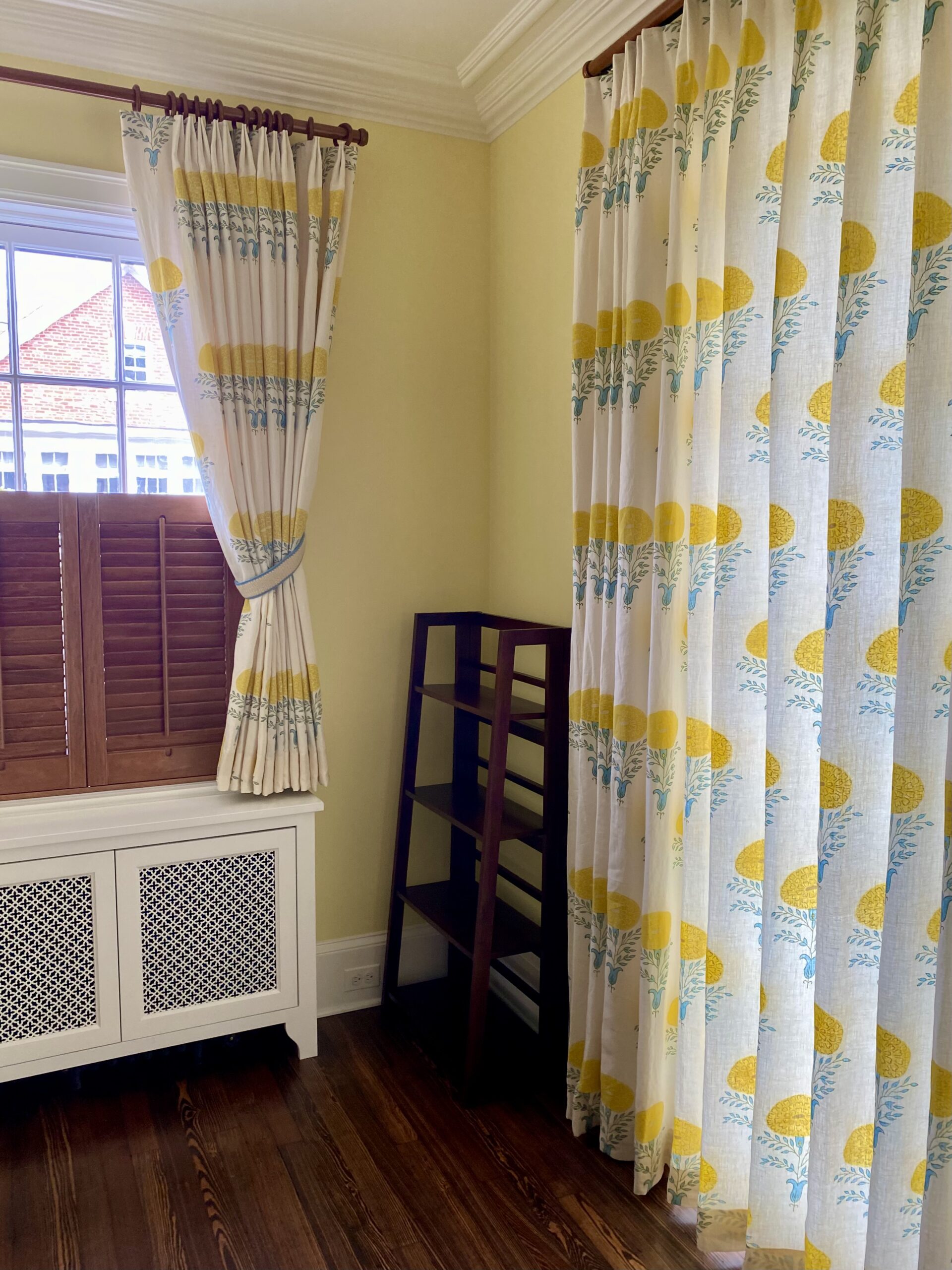
Today, I’m talking about curtains.
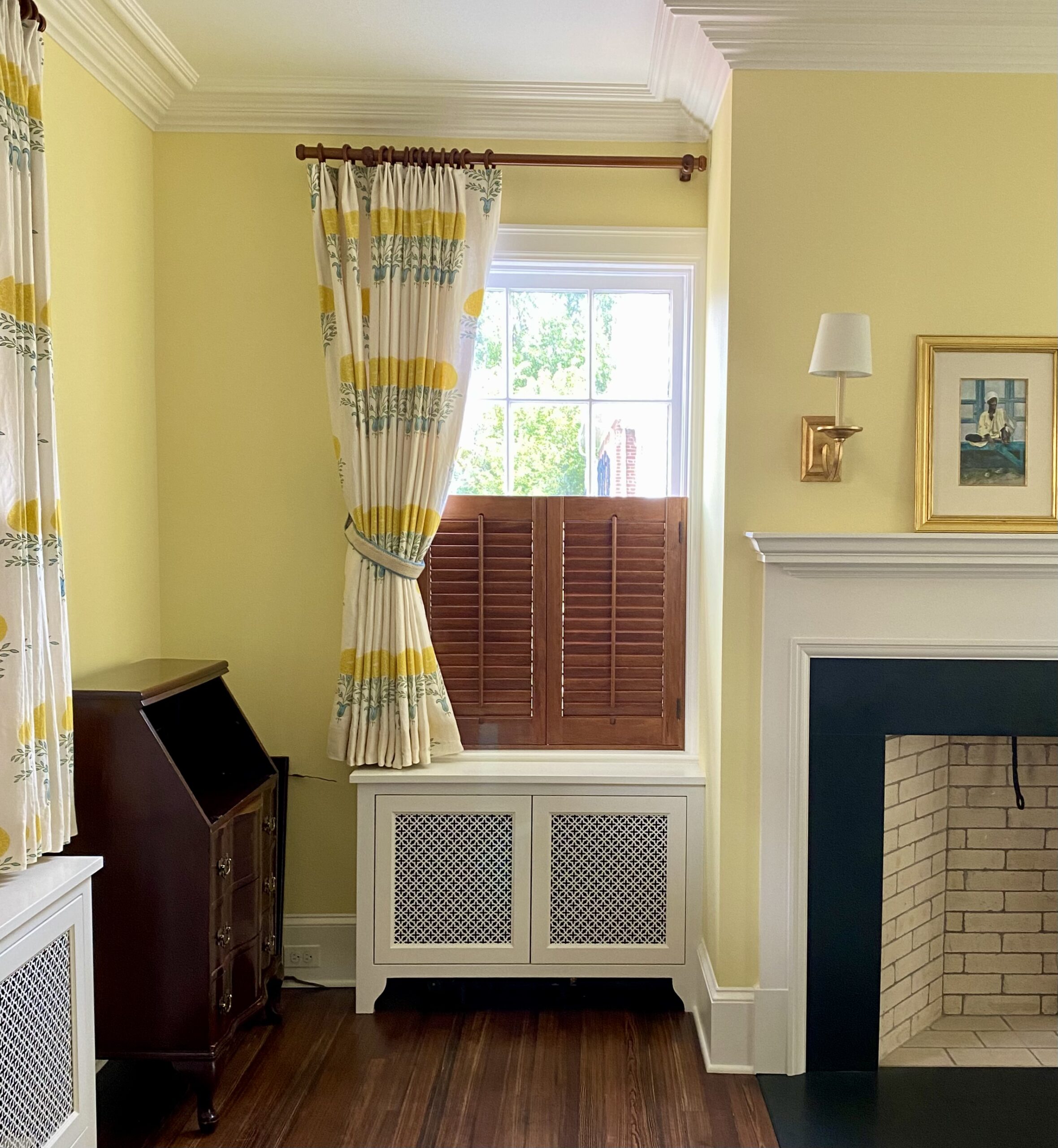
Curtains haven’t been in vogue in recent years. I wonder why that is? But I’m on a mission to bring them back.
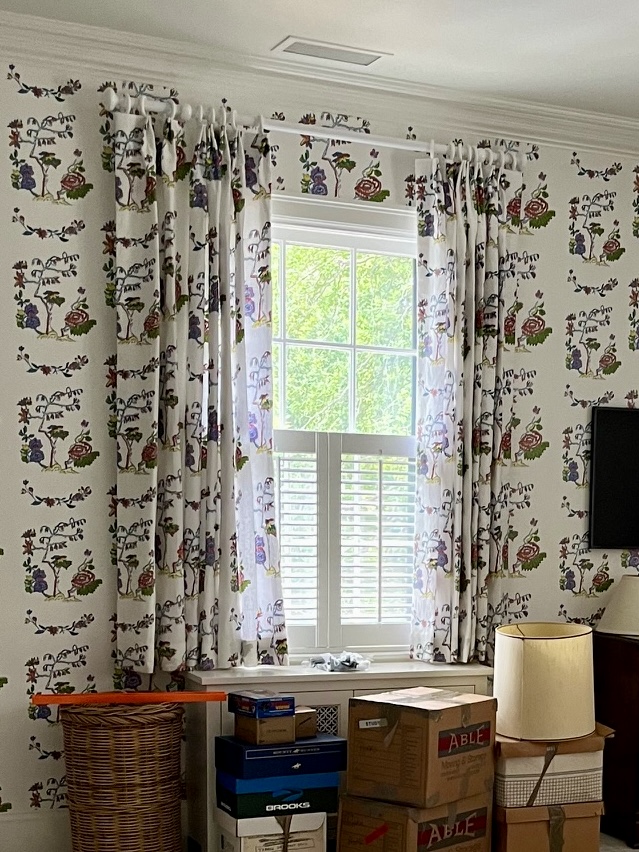
My love affair was born of practicality: a client had radiators below her windows. And we wanted the window treatments to function. We couldn’t just put decorative, non-functioning drapery panels — also known as “side panels” — on either side of the window and call it a day. No, we wanted those suckers to close.
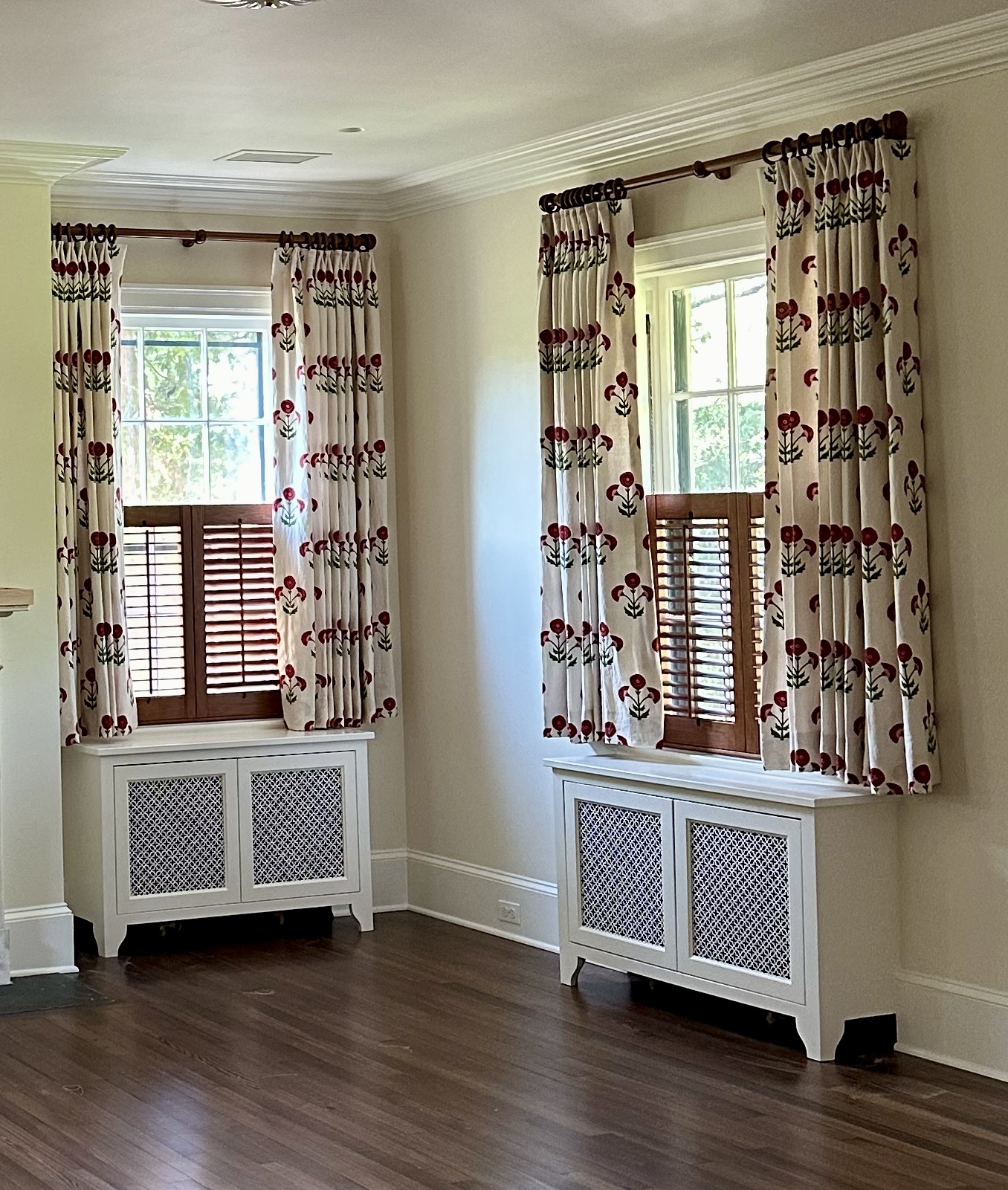
So sill-length curtains it was.
As with drapes, you can place other types of window treatments under curtains. In the pictures above, we used half-height stained shutters with SMALL — 1-7/8 inches wide — louvers as the first layer. (You know how I feel about super-wide, white, unfortunately named “plantation shutters.” These are not they.)
Sheer Roman shades are another of my preferred options as a first layer.
Of course, many people use curtains on their own, which is totally fine.

To have curtains and only curtains on your windows is to celebrate their ease of use. Wsssht wsssht and they’re closed. (Curtains should have batons for this purpose, by the way: a little stick behind each panel that you pull to draw the curtains open or closed. Please use wood batons and not clear acrylic if you have a choice. Painted wood or stained; I don’t care which. But please avoid the plastic ones when you can.)
Back to the matter at hand. Vis-a-vis light control, your options are straightforward. Full light streams in when the curtains are open, obviously. When closed, the light is filtered if the curtains are lightweight, or pretty much blocked out if the fabric is heavy.
As an aside, I’m not a fan of blackout curtains, tbh. I may be in the minority. But if you cannot handle even a sliver of light, I’m going to try and talk you into a double-layered option: say, a blackout roller shade hung snugly inside the top of the window frame under the curtains. It’s not very noticeable when it’s all the way up, and it’s more effective in preventing “light leak.”. Anyway.

You may have noticed that all of the curtained rooms above are bedrooms. I don’t think I’m alone in saying that curtains feel less formal than full-length drapes, and I tend to like my bedrooms casual. If my client and I had had the challenge of covering windows in a LIVING room with radiators, I can’t say with certainty that I would have argued for curtains. Roman shades, maybe, with or without non-functioning side panels.
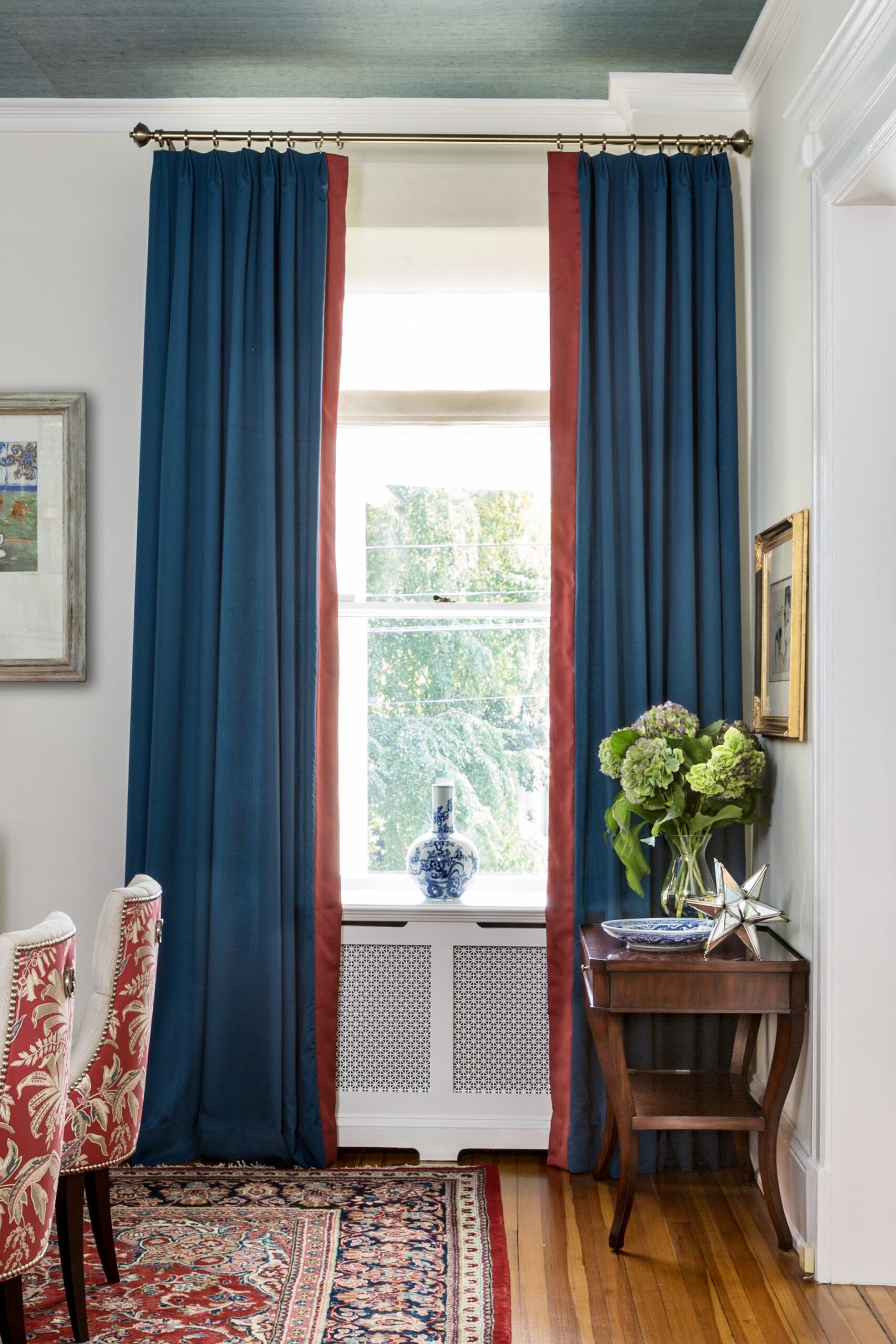
The designer below used curtains in a dining room effectively, I’d say. But it’s a lighthearted, whimsical room…curtains feel appropriate here. (And there’s a radiator to work around :) )

There you have it, Gentle Readers. An overlooked window treatment brought back into the limelight.
And you know how we can control that light? Curtains ;)
Annie is an interior designer who works in and around Washington, D.C. and wherever else fun projects take her. Annie’s book, My Neighbor Saw Me Naked, and Other Reasons You Need Drapes; The Essential Decorating Handbook, will be released by Artisan Books on August 12. But why fight the crowds? You can pre-order your books now — from wherever you like — and before you know it, they’ll be on your doorstep. (You notice we’re saying “books,” plural; they’re the perfect gift!)
