
I don’t have to tell you, Gentle Readers, that buying a sofa is a BIG DEAL. Unless you have a wonderful interior designer to guide you (ahem), it may be helpful to know a few things about what kind of sofa will look best in your space.
The most important thing when purchasing a sofa — more important than color, and, I would argue, even more important than comfort (says the woman who has worn 4″ heels on occasion) — is size. Size so that you may be sure the piece is the proper scale for the room into which it will be placed.
Large rooms
If you have a large room with tall ceilings, your sofa should be long (78” or longer), and the back can be 34″H or taller. The depth doesn’t matter much.
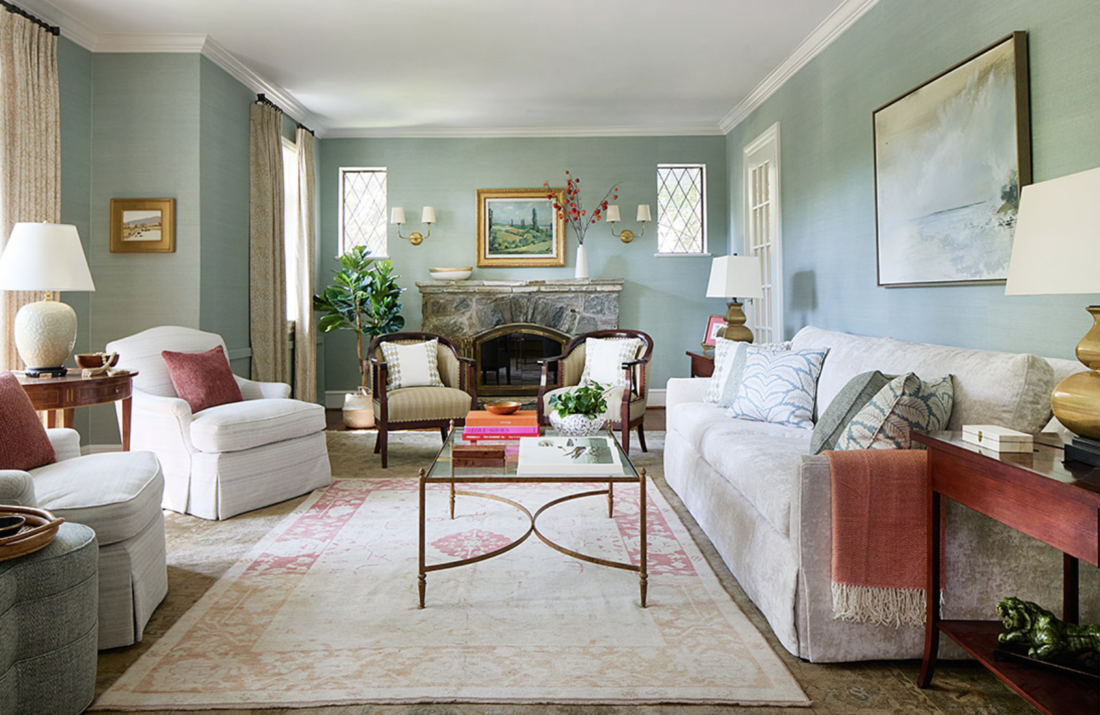
Regarding the legs, a skirt or blocky feet will give the sofa more mass, which is appropriate for large rooms.

The arms can be whatever style you like, from narrow to thick, from rounded to slightly curved to straight. The one arm style I do not recommend is the exaggeratedly curved — think Pottery Barn circa 1994.
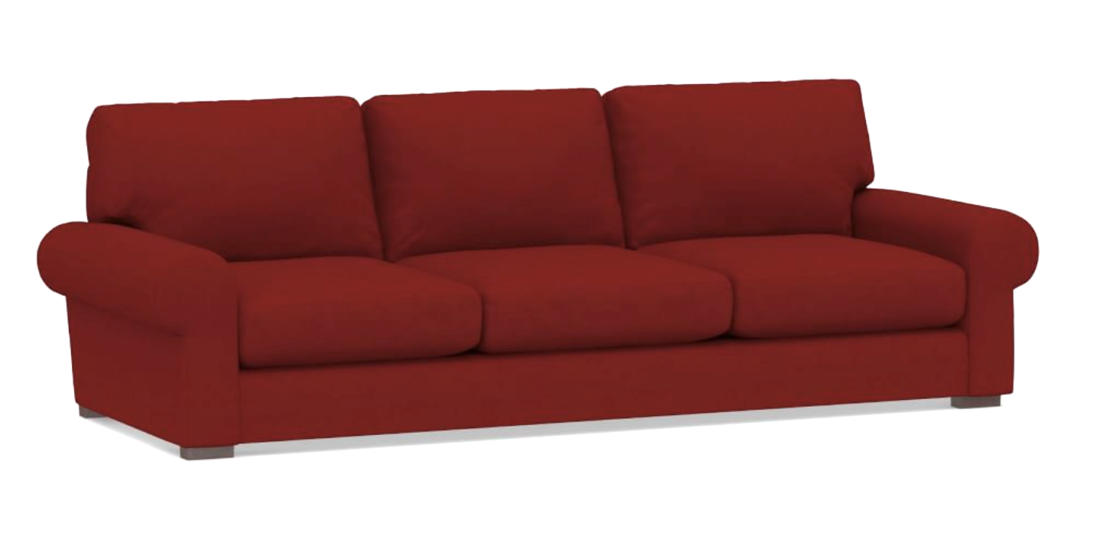
This has nothing to do with the size of your room; I just think gigantic roll arms are…inadvisable.
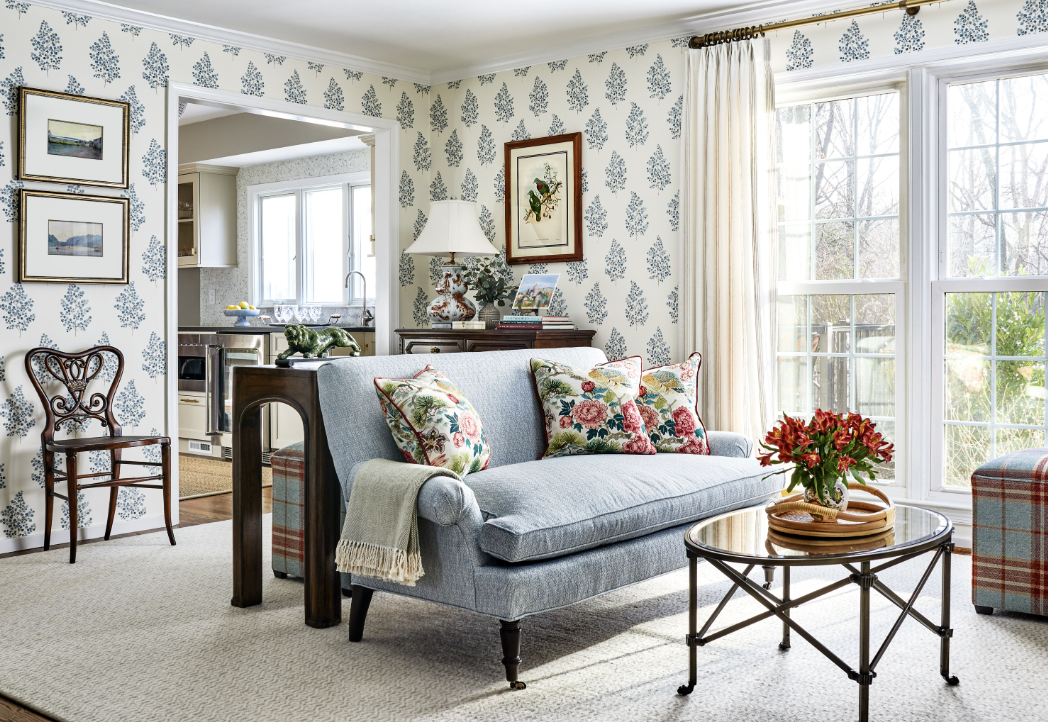
Small rooms
In a small room, you want a smaller sofa. Obviously. Sofas 72″W (6′; heavy math) exist and may have the moniker, “apartment sofa.” Anything shorter is likely called a loveseat.
Keep the height low: 34″H or shorter, including the back cushions (which tend to stand above the rail, the back of the sofa frame). Please be aware that many manufacturers list the rail height as the overall height of the sofa. It can be devastating to discover, upon delivery, that your sofa will appear 6″ taller than you expected thanks to the back cushions.
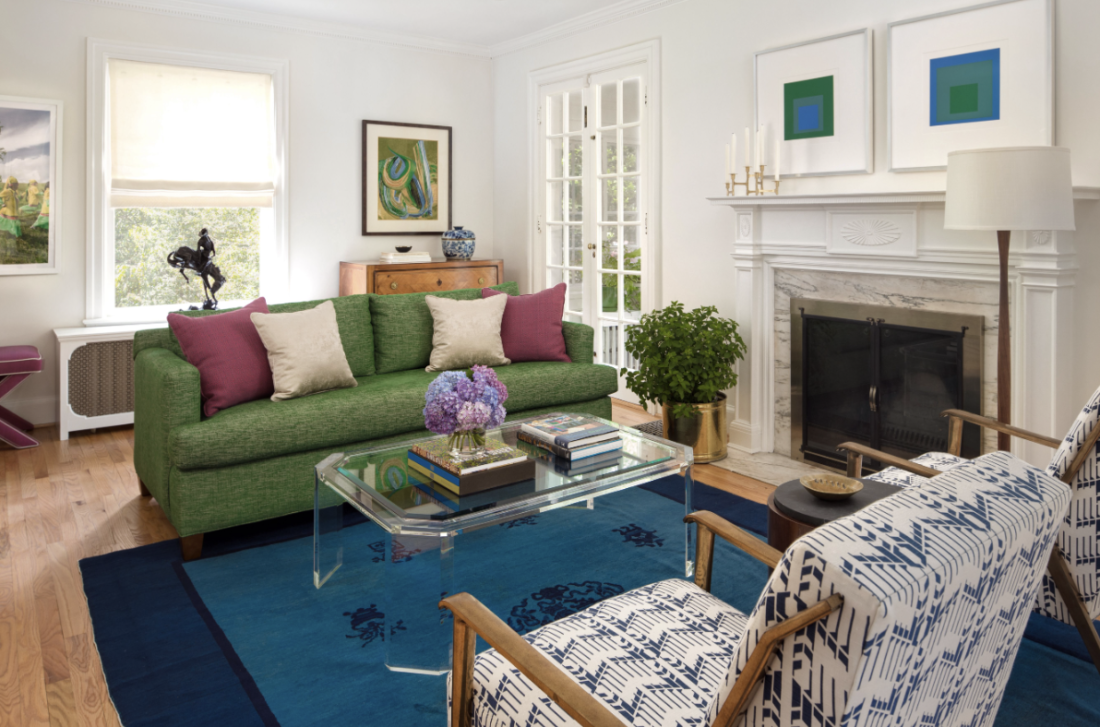
Unlike in a large room, you do have to pay attention to sofa depth in a small space. Look for a sofa that’s as close to 32″D as possible. 34″D is easier to find and may work in your room, but 36″ — a common sofa depth — is likely too deep. Believe me: a 32″D sofa can be plenty comfy.
If your sofa will be up against a wall, please take into consideration the pitch of the sofa, or how far back the sofa leans. Most high-quality sofas have some sort of pitch, but if it’s too great, the sofa is pushed into the room, eating up valuable space.
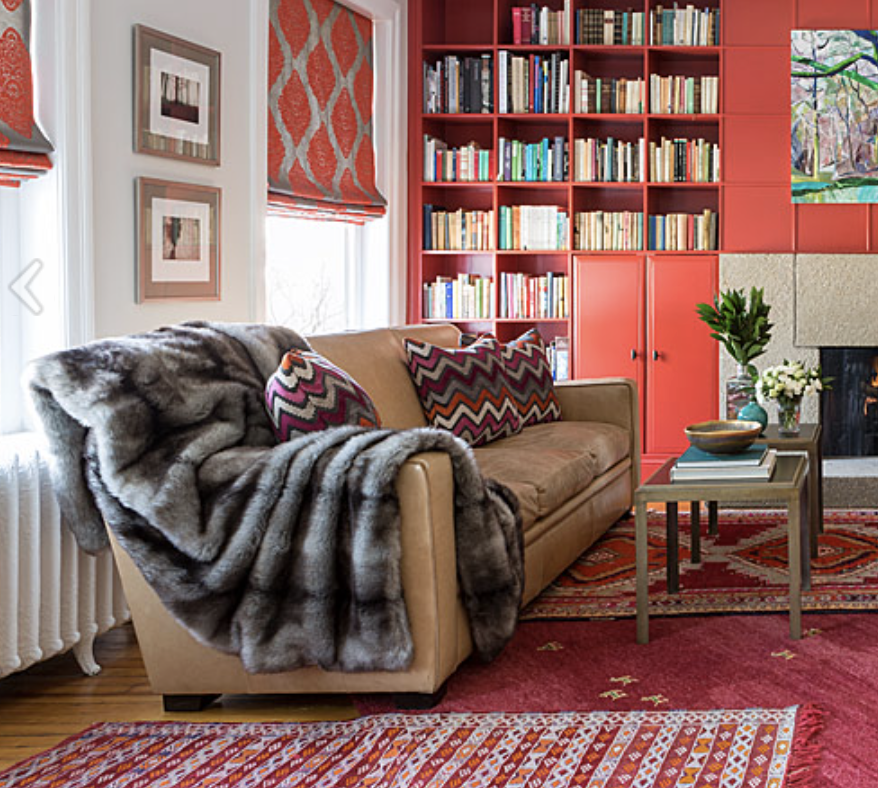
A straighter back will allow you to push the sofa snug against the wall.
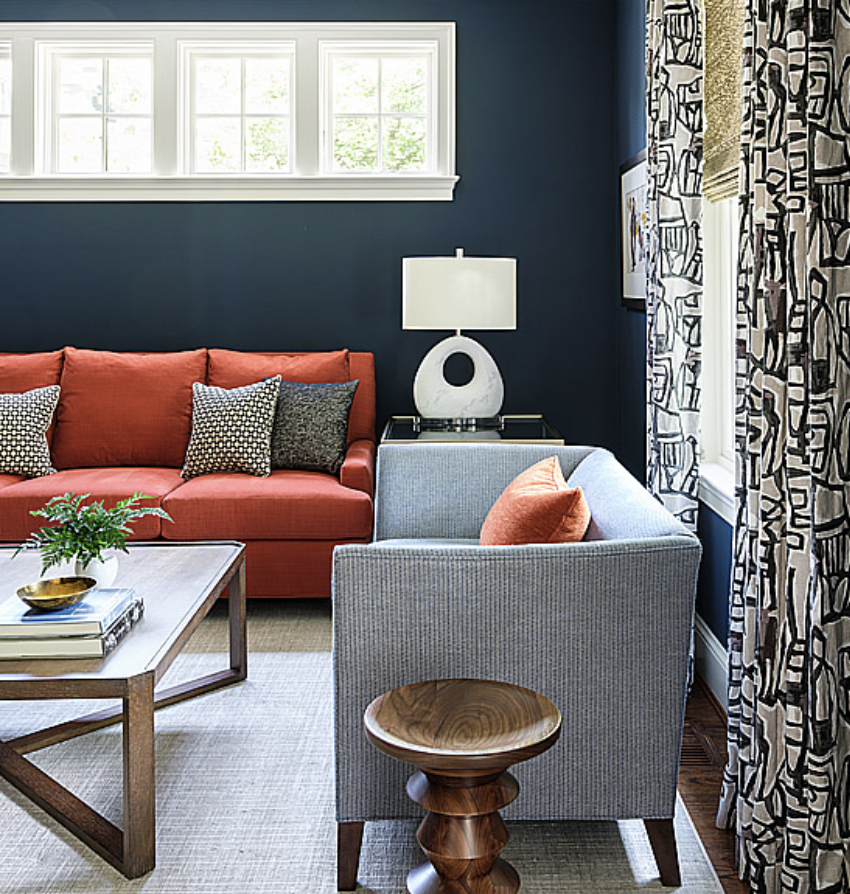
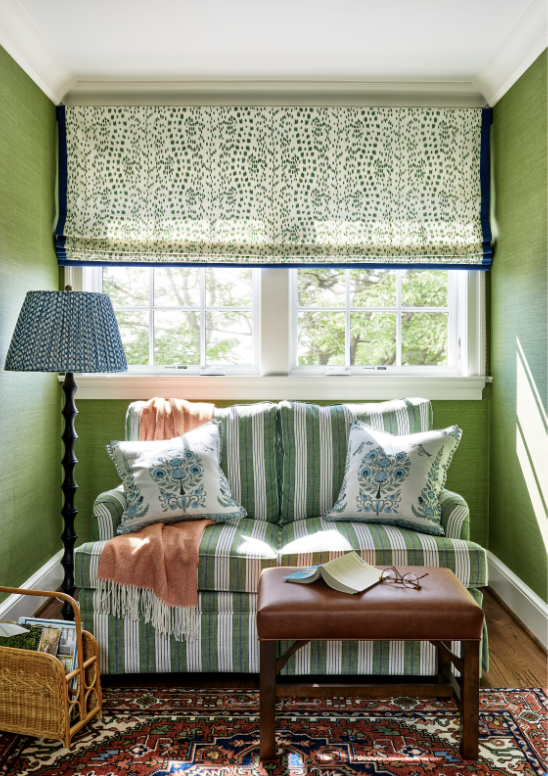
Please keep in mind that when I say, “small sofa,” I am not referring only to the overall dimensions of the piece. I also mean the sofa’s appearance. Narrow arms and slender, exposed legs will make a sofa appear less weighty, and, therefore, more in harmony with the space.
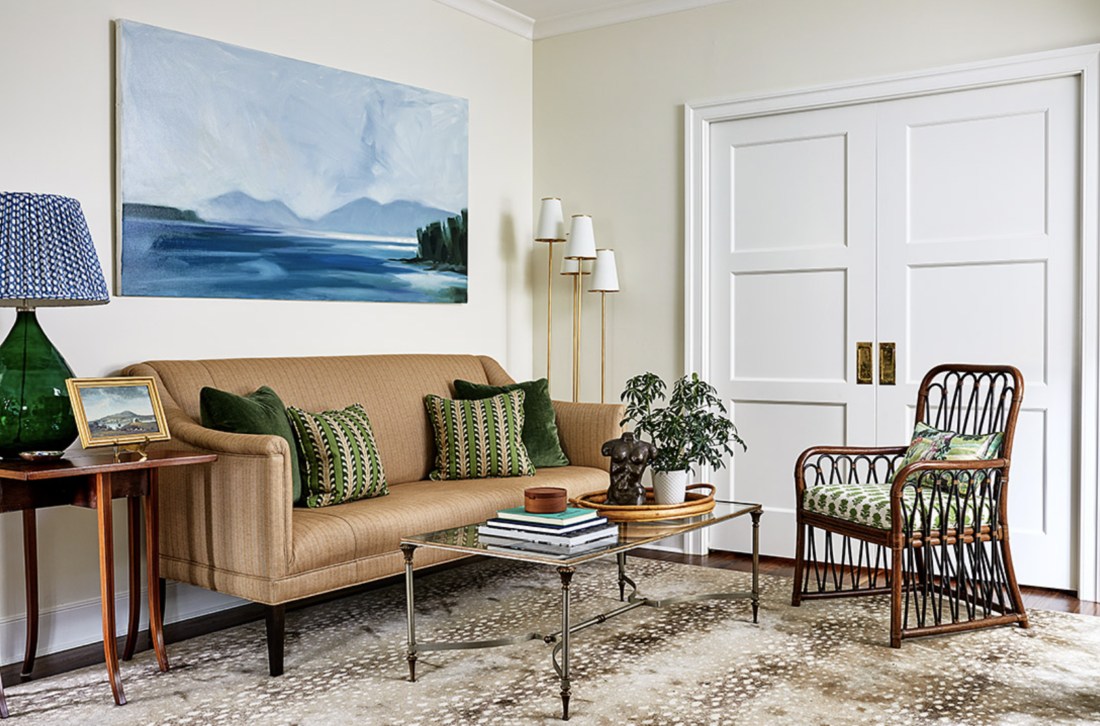
(This is why settees look so dainty: many have tight backs — meaning no loose cushions — tight seats, and tall legs. Settees work in the smallest of spaces, including, sometimes, staircase landings.)
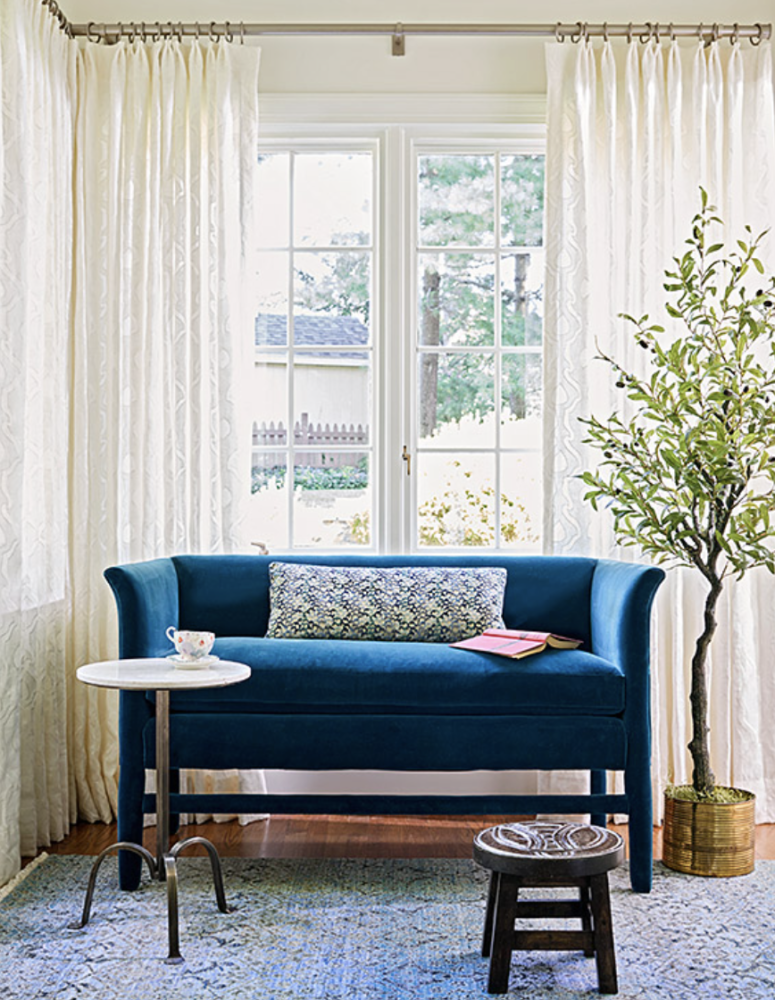
Avoid overstuffed seat and back cushions in small rooms, also. A tight back sofa can be plenty comfortable once you throw accent pillows into the mix.
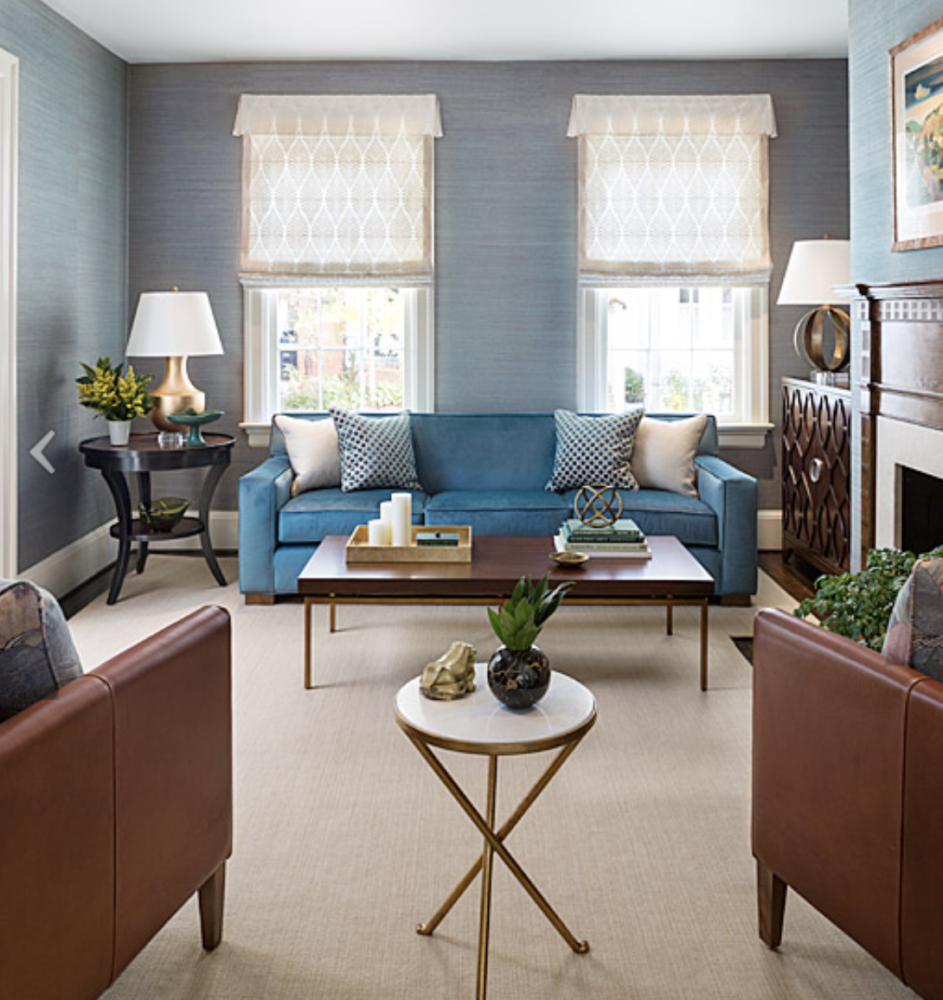
As for the other aspects of sofa assessment, Gentle Readers — such as the quality, style, number of seat and back cushions — those are the subject of future blog posts. I hope this information is helpful, though…at least for now.
All of the rooms pictured are by Annie Elliott Design. We’re based in Washington, DC, and we have offices in St. Michaels, Maryland and Middlebury, Vermont. Our style? Where classic and modern hang out and drink gin.
